
Richard Parsons
Chairman and CEO, Time Warner
Parsons’s purview is mind-boggling: HBO, CNN, TBS, Cartoon Network; Time Warner Cable; Time Inc., with more than 150 titles; AOL, still generating $8 billion in annual revenue; and Warner Bros. (No. 1 in film grosses, television production, and DVD sales). Cleanup man for history’s most disastrous merger, he’s succeeded in creating internal stability and installing well-regarded former HBO head Jeff Bewkes as his heir apparent. As corporate managers find themselves attacked by hedge funds and self-styled “shareholder activists,” Parsons’s handling of Carl Icahn’s attempt to push him off the board and split up the company was picture-perfect, a B-school case study. But that pesky stock price still isn’t moving . . .
Roger Ailes
Chairman and CEO, Fox News Channel; chairman, Fox Television Stations
Ailes’s Fox News Channel is the preeminent news organization of George W. Bush’s America. He brought the brash, outspoken, unabashedly right-wing sensibility of talk radio (and of Ailes himself) to TV, with vast and continuing commercial success. So dominant is FNC that nine of the ten most-watched cable-news shows air on Fox. Its ties to the Bush White House (remember that Fox was the first to declare Bush the victor in 2000) are strong enough that commentator Tony Snow was named press secretary, and a journalist complained that the TVs on Air Force One are tuned only to FNC. Ailes’s dominion keeps expanding: Last year, he wrested control of Fox’s television stations—News Corp.’s biggest cash-flow generator—from wayward heir Lachlan Murdoch. Also, inadvertently created Stephen Colbert.
Bill Keller, Arthur Sulzberger, Jr., and Jonathan Landman
Executive editor, publisher, and deputy managing editor of the New York Times
A stock that’s lost more than half its value over the past four years, a newsroom buffeted by scandal, bellwether of an industry with its best days behind it—and yet the New York Times remains America’s most vital news outlet, the chief codebook with which New Yorkers (and the world) decipher the interesting times we’ve been cursed to live in. Every day, it also changes that world—think, especially, of Nick Kristof, who single-handedly forced the world’s attention on Darfur. Keller steers the paper, in turn setting the day’s news agenda around the country, and the bedraggled Sulzberger attends to larger issues, like new e-newspaper software developed with Microsoft. For different reasons, Keller and Sulzberger are both unfireable, and they’ll be around for years. But the future of the paper rests at the moment with Landman, who is director of the paper’s online strategy. The redesign, DealBook, and even the amateur-hour video blogs are a good start: Will the paper’s long-overdue lavishment of attention on the Web protect the Times’ future, or will 155 years of history not matter in a realm of limitless alternatives?
Jon Stewart, Ben Karlin, and Stephen Colbert
Host and executive producer, The Daily Show With Jon Stewart, and executive producer, The Colbert Report; executive producer, The Daily Show and The Colbert Report; host and executive producer, The Colbert Report
The Pew survey said it all: Twenty-one percent of Americans between the ages of 18 and 29 turn to The Daily Show as their only source of news (the networks got 23 percent)—and that was before Stewart’s Oscar-hosting gig, The Colbert Report, and Colbert’s own ultra-Establishment gig emceeing the White House Correspondents’ Dinner. The Daily Show’s political sensibility—smart, pragmatic, fed up with the Dems but horrified by the GOP—is extremely appealing to New Yorkers (we flatter ourselves by seeing it as our own). Stewart has become the comedian-as-Cronkite; to some, his team are the only people on TV worthy of trust.
Si Newhouse
Chairman, Condé Nast
Newhouse’s Condé Nast demonstrates that expensive, upmarket, lavishly produced magazines still have a place in the national conversation (witness Sy Hersh’s Washington-rattling New Yorker scoops and Vanity Fair’s latest tabloid-of-record tearful-celebrity confession), in dictating stylishness, and on ad buyers’ budgets (Vogue had 2,959.33 ad pages in 2005). Unlike the more penny-conscious Hearst or the layoff-prone Time Inc., Newhouse’s company spends money freely, offering favored talent outsize salaries and perks. He’s a living economic inefficiency in an industry increasingly attuned to profit over prestige. Si just has to please Si.
Nick Denton
Publisher, Gawker Media
Made blogs a popular—and profitable—art form, partly by paying his bloggers intern-level wages. Denton and Gawker.com’s original editor, Elizabeth Spiers, both jockey for credit for pioneering the now-ubiquitous form: jokey headline; snide, quippy post; links; and a willingness to run suspect info (hey, the Internet hive mind auto-corrects!). New York’s other blog baron, Weblogs, Inc., founder Jason McCabe Calacanis, has already cashed out by selling to AOL, but Denton remains on his own, bringing the Gawker formula to, among others, sports nuts (Deadspin), shoppers (The Consumerist), and Silicon Valley (Valleywag). Media: Katie Couric, El Diario’s Publisher, Sean Cassidy …

Rossana Rosado
CEO and publisher, El Diario/La Prensa
The queen of local Hispanic media. Rosado runs El Diario, the ink-and-newsprint lifeblood of New York’s Hispanic population (28 percent of the city; it’s 12.5 percent nationally), which has a notably activist tenor: El Diario’s motto translates to “Champion of the Hispanics.” The El Diario empire has recently increased its reach and visibility, linking with a series of Spanish-language papers across the country to form impreMedia, America’s largest publisher of Spanish-language papers. And the papers have amped up their reporting, publishing an award-winning series on New Jersey prisons illegally using dogs to handle immigrant inmates. As Rosado, a former street reporter who segued to publisher after serving as editor-in-chief, has said, “We’re a small paper in a big newspaper town. But we’re a huge paper within the small town that is the Hispanic community.”
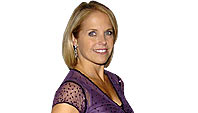
Katie Couric
Co-anchor, the Today show; anchor-to-be, CBS Evening News
Just look at all the fuss. Couric’s move seismically altered the landscape of nightly news, as well as the profit-drenched morning shows. Her sway over her audience is undeniable: After her on-air colonoscopy led to a whopping 20 percent increase in test rates, the phenomenon of celebrities’ having an impact on health issues has been dubbed the “Katie Couric Effect.”
William Bastone
Editor and co-founder, the Smoking Gun The Smoking Gun Website has brought “gotcha” journalism into the digital age—and now no celebrity’s divorce filing, concert rider, or mug shot is safe. Bastone, a former Village Voice reporter, scored a mind-blowing 75 million page views by exposing James Frey’s Million Little fabrications in January, but that was just one in a series of scoops that include posting Arnold Schwarzenegger’s 1977 Oui interview, the Bill O’Reilly sexual-harassment complaint, and the Duke rape indictment. Court TV (which bought TSG in 2000) brought cameras into the courtroom; the Smoking Gun puts the evidence on your desk.
Richard Johnson
Editor, “Page Six”
Orchestrator of the most closely read gossip page in America. “Like the Mafia,” as Jared Paul Stern so inelegantly put it, “Page Six” doles out favors to its friends and wreaks havoc on those who don’t cooperate, making stars and enemies alike. It’s turned the foibles of the famous into a highly entertaining spectator sport. Column mentions help keep Johnson’s favored restaurants and nightclubs full. Has popularized memorable nicknames (“the portly pepperpot”) and euphemisms (“canoodling”). The column was such an irritant to a press-shy California billionaire that he came out of hiding in an attempt to swat “Page Six” down—and its Teflon editor continues to ride the whole thing out.
Dan Klores and Sean Cassidy, Howard and Steven Rubenstein, and Ken Sunshine
Chairman and CEO, Dan Klores Communications; managing director and president, Dan Klores; president, Rubenstein Associates, Inc.; senior executive vice-president, Rubenstein; president, Ken Sunshine Consultants
The men on top of New York’s prime public-relations firms playcrucial, largely offstage roles in practically every public skirmish in this town, deciding vicious municipal battles (what was the stadium face-off but a PR fight?) and celebrity duels (Nick vs. Jessica! Howard vs. CBS!). Both the Rubensteins and Klores’s shop are caught between generations: Howard Rubenstein, 74, is handing the firm to his son Steven, 36; Klores has left the day-to-day running of hiseponymous agency to make films, and Cassidy has not so quietly expanded Klores’s roster by 25 percent. Sunshine, the Hollywood man in the city, has been called “the Madonna of PR,” that is, the king of reinvention. Respected for keeping huge clients—Leo DiCaprio, Justin Timberlake—out of trashy media, Sunshine’s credited with making stars change their behavior so the tabs won’t find them. Media: Rupert’s World and the Bonnie Fuller Effect

It’s Rupert’s World
You’re just watching, reading, listening, surfing, and singing karaoke in it.
You get up early and switch on Fox News for Your World With Neil Cavuto and catch the end of an O’Reilly Factor repeat; he’s hawking “The Spin Stops Here” golf balls. Flip to Good Day New York, then grab the Post for the subway—check out that “Page Six” item on The Simple Life. At work, update your MySpace page, search for a better job at SimplyHired.com, then pop to the newsstand for the Times of London, the Sun (National Rugby League scores—sweet!), and the Weekly Standard (to see what Tony Snow’s White House pals are thinking). Your FoxSports.com Fantasy Football draft is coming up—study the prospects at Scout.com. Then chat with the cute sales rep from HarperCollins about How I Met Your Mother (using flirting tips from AskMen.com; so much better than The Game). Say, maybe she wants to catch a film: How about The Sentinel? Meh—RottenTomatoes.com says it’s a poor man’s 24. So you head home alone—you need to catch up on The Shield anyway. Too bad your DirectTV’s been acting up—it didn’t record M*A*S*H or Boston Legal. Your buddies in England and India never have problems with BSkyB Or Star. You could always rent a flick: Napoleon Dynamite or Alien? Though you should finish Freakonomics, and Mom’s been pushing The Purpose-Driven Life. But you can’t put down Nicole Richie’s The Truth About Diamonds! Finish it, then surf IGN.com for dirt on next summer’s Halo movie. Whoa, there’s a Website that lets you do karaoke online! Then check the TV Guide Channel: Hey, a Buffy rerun on Channel 9! Wait: Isn’t tonight a new episode of American Idol? D’oh!

The Fuller Effect
Bonnie and her children.

(1.) February 2002: Bonnie Fuller hired as Us Weekly editor. She brings a tabloid–meets–Tiger Beat aesthetic and the epochal “Stars—They’re Just Like Us!” Sales rise 55.2 percent.

(2.) November 2002: Euro mag giant Bauer launches Us’s first imitator, In Touch, featuring “In touch with their real sides!” celeb pics.

(3.) June 2003: Us loses Fuller to American Media, Inc. She remakes the National Enquirer and Star, which now asks, “Stars: Are They Normal or Not?” Circulation at Star jumps over 10 percent.

(4.) The Fuller frenzy: People, still the category leader, unveils a new cover treatment in September 2003 that closely apes Us’s Fullerized design. Life&Style, Celebrity Living, Inside TV, and OK! debut.

(5.) August 2005: Celebs get tab-savvy. Vanity Fair is used to shape tabloid coverage; Jennifer Aniston’s cover interview is virtually reprinted in Us, which blares, JEN TELLS ALL.
(6.) Bonnie’s bubble bursts? Inside TV folds last November, Celebrity Living in April. Newsstand sales at Fuller’s Star slide 8 percent in the most recent quarter. Still, Us’s hot streak continues, with a 12.7 percent circulation jump in 2005. The Influentials in Politics