Share on Facebook
 Share on X
 Share by Email
 Share on Google Classroom
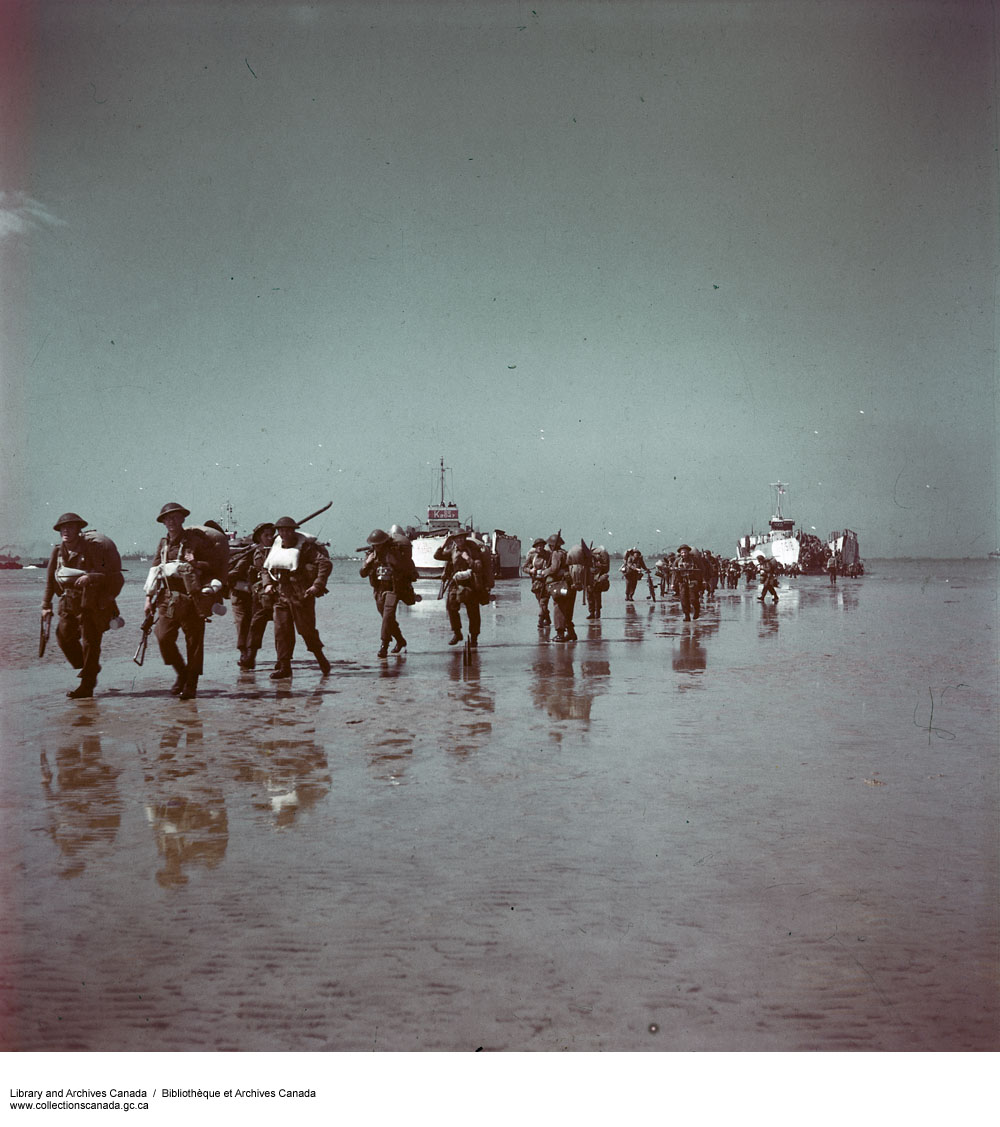
Normandy Invasion
On 6 June 1944, after months of careful planning, Allied forces under the command of United States General Dwight D. Eisenhower launched Operation Overlord, the invasion of western Europe, which had suffered under Nazi occupation for four years (see D-Day and the Battle of Normandy). Allied armies were already fighting their way through Italy, and it was hoped that a new, western European front would ease pressure on the Soviet Union in the east — fighting Hitler’s armies in Russia — and hasten the defeat of Germany.

The assault on Normandy, along a 100 km stretch of French coastline across the English Channel from Great Britain, was the largest seaborne invasion in history. On D-Day, the campaign’s opening day, a vast naval armada, supported by squadrons of aircraft, bombarded German defences along the Normandy coastline before delivering 156,000 American, British and Canadian troops onto five beaches codenamed Utah, Omaha, Gold, Juno and Sword. Among this invasion force were three divisions of paratroopers dropped behind enemy lines. On the beaches, the soldiers’ task was to storm enemy-held territory and push inland, securing a coastal bridgehead from which the Allies could pour in reinforcements to begin the liberation of France. The 3rd Division’s objectives on D-Day were to cut the Caen-Bayeux road, take the Carpiquet airport 18 km inland and form a beachhead linking Gold and Sword beaches.
Did you know?
When planning a military operation, the specific date on which the attack would occur was not always known in advance. For that reason, the term D-Day was used to refer to the day on which an attack was to begin. Though the term was used to plan many operations, it is now most associated with the Allied invasion of Normandy, France, on 6 June 1944.
Canada played a critical role on D-Day. Royal Canadian Air Force squadrons patrolled the skies and attacked enemy targets onshore, while 10,000 sailors onboard 110 ships of the Royal Canadian Navy supported the invasion. It fell to more than 14,000 volunteer soldiers from across Canada, under Major-General Rod Keller, commander of the 3rd Canadian Infantry Division, to storm Juno Beach.
Juno Beach was a 10 km stretch of coastline between Saint-Aubin-sur-Mer, Bernières-sur-Mer, Courseulles-sur-Mer and Graye-sur-Mer — the beaches codenamed Gold and Sword were to its west and east.
Assault on Juno Beach
Desmond Piers, a 30-year-old naval captain, watched the invasion unfold from the bridge of his destroyer, HMCS Algonquin. “It was a murky morning,” he remembered. “Before dawn we could hear aircraft from Britain carrying paratroopers across the [English] Channel. Then daylight came, and the sky was filled with bombers and fighters, and there before us was France, with all these landing craft streaming towards it. It was just amazing.” (See also Juno Beach: Day of Courage.)
Lloyd Bentley, 48 Squadron RAF
Lloyd Bentley was one of the tens of thousands of Canadians who served with the Royal Air Force during the Second World War. On D-Day, he was responsible for dropping paratroopers inland from Juno Beach. In an interview with The Memory Project, Bentley recalled the sheer scale of the D-Day operation: “There were thirteen thousand aircraft that took part and between five and seven thousand ships. And I swear, if I had long legs and stepped down on those ships I could have walked back to England, they were so thick. It was the most amazing sight I’ve ever seen in my life.” Watch Bentley’s interview in the video below. It is also included in The Memory Project’s DVD resource, Record of Service.
Courseulles-sur-Mer
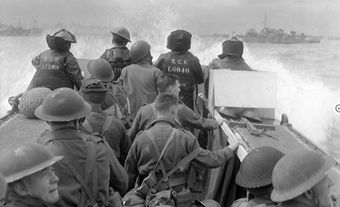
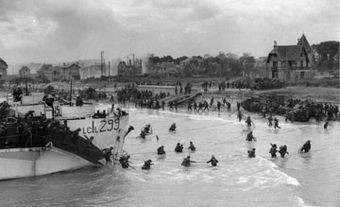
On one of the landing craft was Lockie Fulton, a farmer’s son from Birtle, Manitoba, who commanded a company of The Royal Winnipeg Rifles. His men were among the first wave of Canadians to assault the western end of Juno Beach, in front of the heavily-defended town of Courseulles-sur-Mer. The English Channel “was terribly rough,” he said. “A lot of the fellas were seasick. As we got closer, small-arms fire began hitting the front of our craft. Then we hit bottom, the ramp went down, and I jumped into the water up to my waist, loaded with well over 45 kilograms of equipment.
“We had to go at least 50 yards before we got out of the sea. It wasn’t a pleasant experience, but we simply struggled through it. You’d see a guy fall next to you. You couldn’t help him, but you’d try to drag him along anyway. It was something to see those bullets skipping at you like stones across the water. I thought if I jumped high enough, I might not get hit.”
Because they arrived three hours after optimum tide conditions, the obstacles the Germans had laid on the beach were partially submerged, making it difficult for engineers to clear a path and causing landing craft to wind their way to shore. Landing craft encountered mines along the way, with about 30 per cent destroyed or damaged on the trip to shore.
In those first waves of assault, almost one in every two men was either wounded or killed. Fulton lost 15 men in his company’s dash up the beach. The two other infantry regiments on the western end of Juno — the Canadian Scottish and the Regina Rifles — also lost men to the mines in the sand, and to the bullets and mortars fired by Germans from concrete bunkers overlooking the sea, defences left largely intact despite the pre-invasion air and naval bombardment. The infantry had also expected support from amphibious Duplex Drive (DD) tanks — equipped with inflatable skirts and propellers — designed to “swim” off the landing craft and ahead of the infantry, firing as they drove up onto the beaches. But at Courseulles and elsewhere, many of the DD tanks were launched behind the infantry and offered little support, or were swamped by the waves and sank, sometimes with their crews inside ( see Armaments).
Wrote the war-diarist of The Royal Winnipeg Rifles, in only a slight exaggeration: “The bombardment having failed to kill a single German or silence one weapon, these companies had to storm their position ‘cold’ and did so without hesitation.”
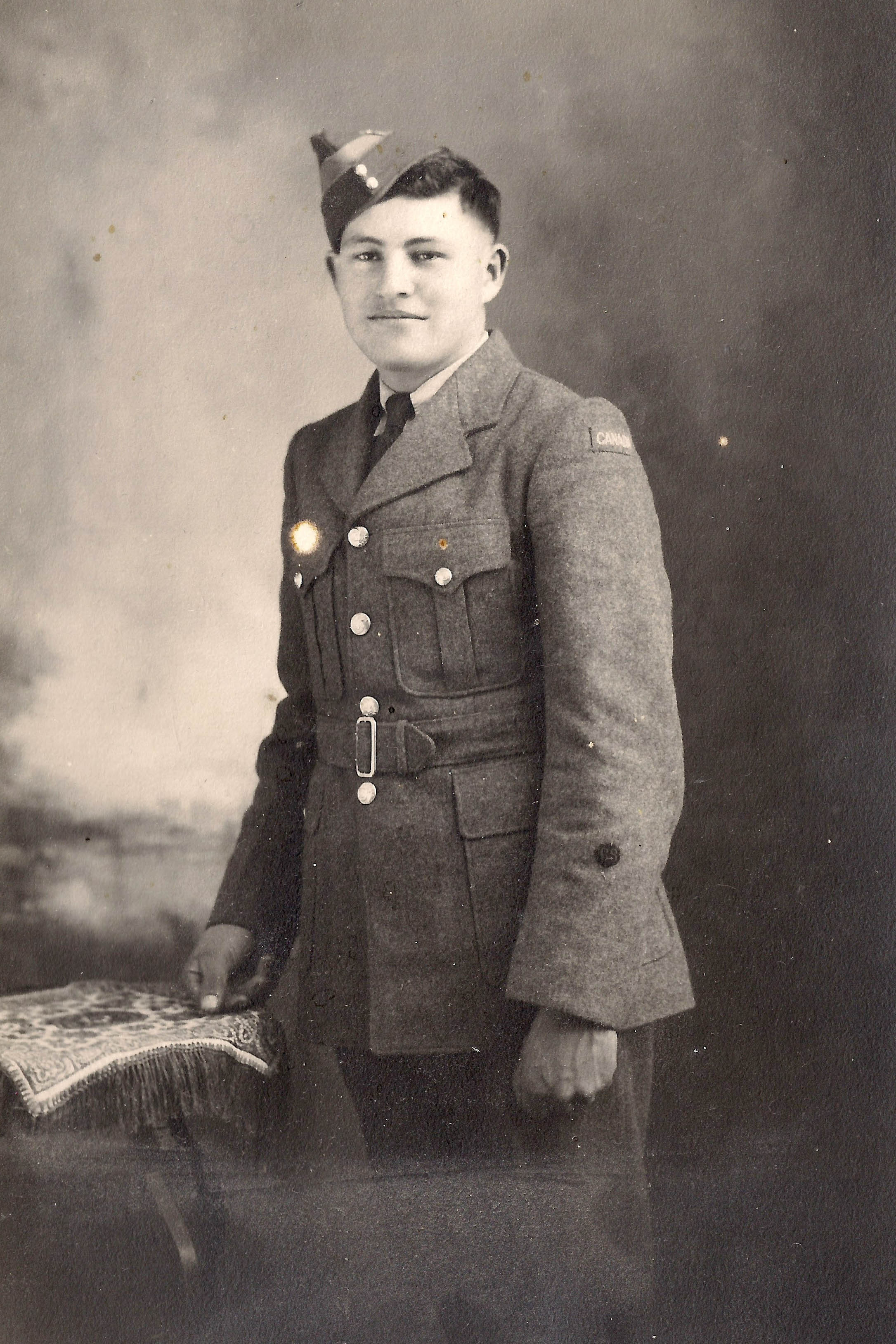
Francis William Godon, Royal Winnipeg Rifles
Francis William Godon served with the 3rd Division of the Royal Winnipeg Rifles during the Second World War. At only 19 years old, the Métis soldier was one of the 14,000 Canadians who stormed Juno Beach on 6 June 1944. In an interview with The Memory Project, he described the horrors of that day. “Crawl and run and crawl and run. And one thing you couldn’t do was stop on Juno Beach. If your buddies got hurt during that and the yelling and crying, you couldn’t stop, you had to keep going. If you stopped, well you were a dead duck too. So you had to keep going. Which was a hard thing to do because the beach was something like ketchup on the beach was, when we made the beach. That’s how blood red the beach was.” Listen to the full interview at The Memory Project’s archive.
Bernières-sur-Mer
Further east along Juno Beach it fell to the Queen’s Own Rifles, a Toronto infantry regiment, to come ashore and capture the village of Bernières-sur-Mer, from where Germans in concrete machine gun and mortar bunkers were firing behind a brick seawall. “Move! Fast! Don’t stop for anything,” barked Sergeant-Major Charlie Martin to his men as they left their landing craft and entered the firestorm. Rolf Jackson was the 11th person down the ramp of his craft. Eight of the men who went before him died during their charge to the seawall, while he himself was struck by a bullet in the hand, and then by a piece of shrapnel in his shoulder.


Did you know?
Charlie Martin’s Battle Diary memoirs, first released in 1994, are among the most vivid portrayals of the lives of ordinary Canadian soldiers in the Second World War.
Once again, the DD tanks were behind the assaulting infantry, so destroying the enemy required infantry soldiers, having survived their harrowing race across the beach, to storm machine gun nests using grenades, rifles and bayonets. After more than an hour of hard combat, the Queen’s Own Rifles, backed by a second wave of troops from Quebec’s Régiment de la Chaudière, were moving past the seawall into the streets of the village. More than 60 Canadians were killed and dozens more wounded in the assault on the Bernières-sur-Mer seawall, the costliest single battle on Juno Beach (see also La Maison des Canadiens).
Saint-Aubin-sur-Mer
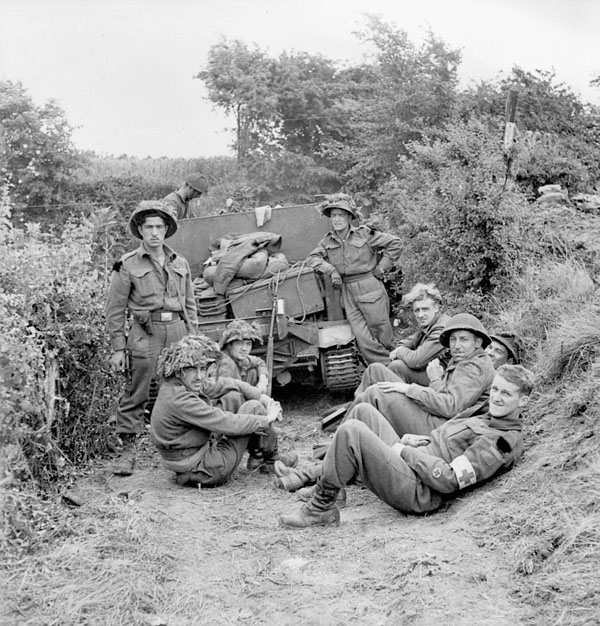
At the eastern end of Juno, The North Shore (New Brunswick) Regiment stormed the sands below the village of Saint-Aubin-sur-Mer. “I could hear the bullets hissing and landing near our assault boat as we sailed close to the shore,” remembered Fred Moar, a 21-year-old platoon commander from Chatham, New Brunswick. When the door on his landing craft swung open, Moar and his men made the dash of their lives.
“Running as fast as we could across a sandy beach — mortars falling, bullets and shells exploding, smoke everywhere — somehow through this rain of death, I reached the seawall,” he said. “I lost several men before we reached it.”
Moar and the survivors of his platoon gathered their nerves below the seawall, then found a hole that had been blasted through the rampart and moved cautiously off the beach into the streets of Saint-Aubin. They and other men of The North Shore Regiment, assisted by a British commando unit, spent the day methodically clearing the village, and later, capturing German gun positions in the countryside behind the town.
At one point, Moar’s platoon was approached by an old woman, who asked the soldiers how long they planned to stay. “Forever,” they replied.

“Je Suis Canadien”
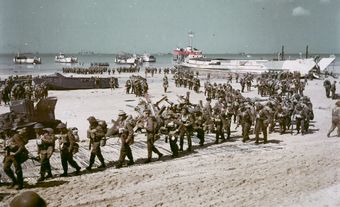
As D-Day wore on and the enemy’s coastal defences were destroyed, Juno Beach was transformed from a killing ground into a chaotic traffic jam, with waves of troops, supplies, trucks and tanks streaming ashore from landing craft. Among all the traffic were groups of German prisoners and wounded Canadians waiting transport back to England.


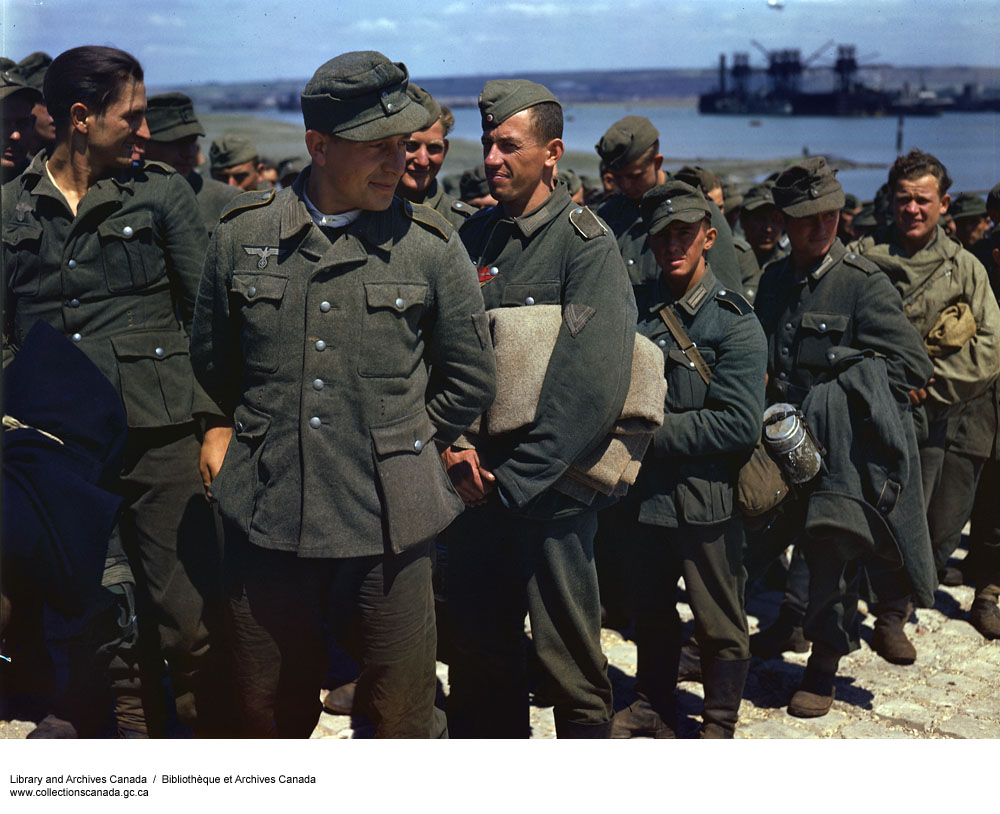

Meanwhile, Canadian forces pushed cautiously inland, assaulting enemy positions, rounding up prisoners, attacking German radar stations, and digging-in for anticipated counter-attacks that night and the following day. Although none of the Allied forces achieved all their D-Day objectives, the Canadians managed to push farther inland than Allied troops on any of the other beaches.


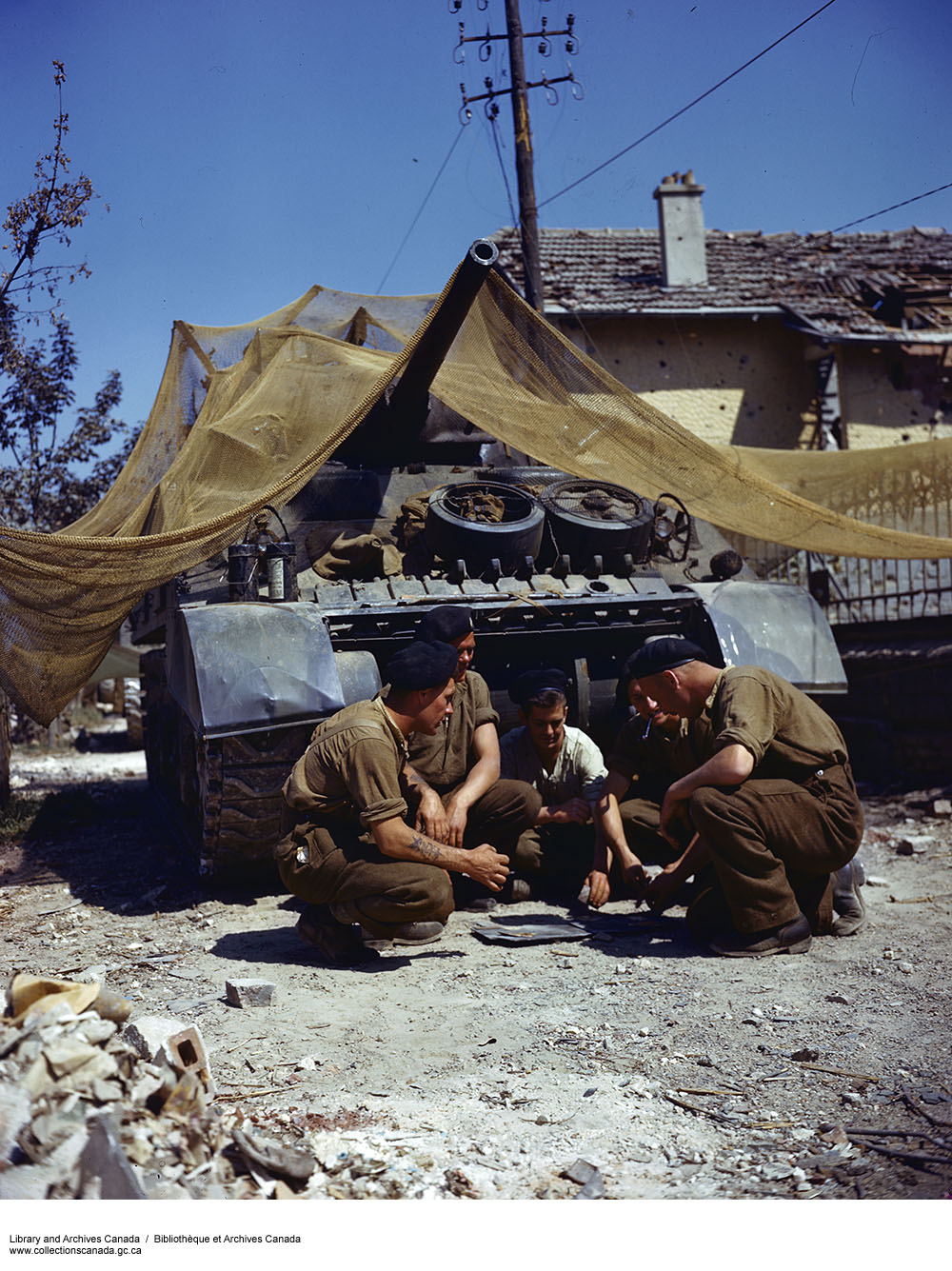
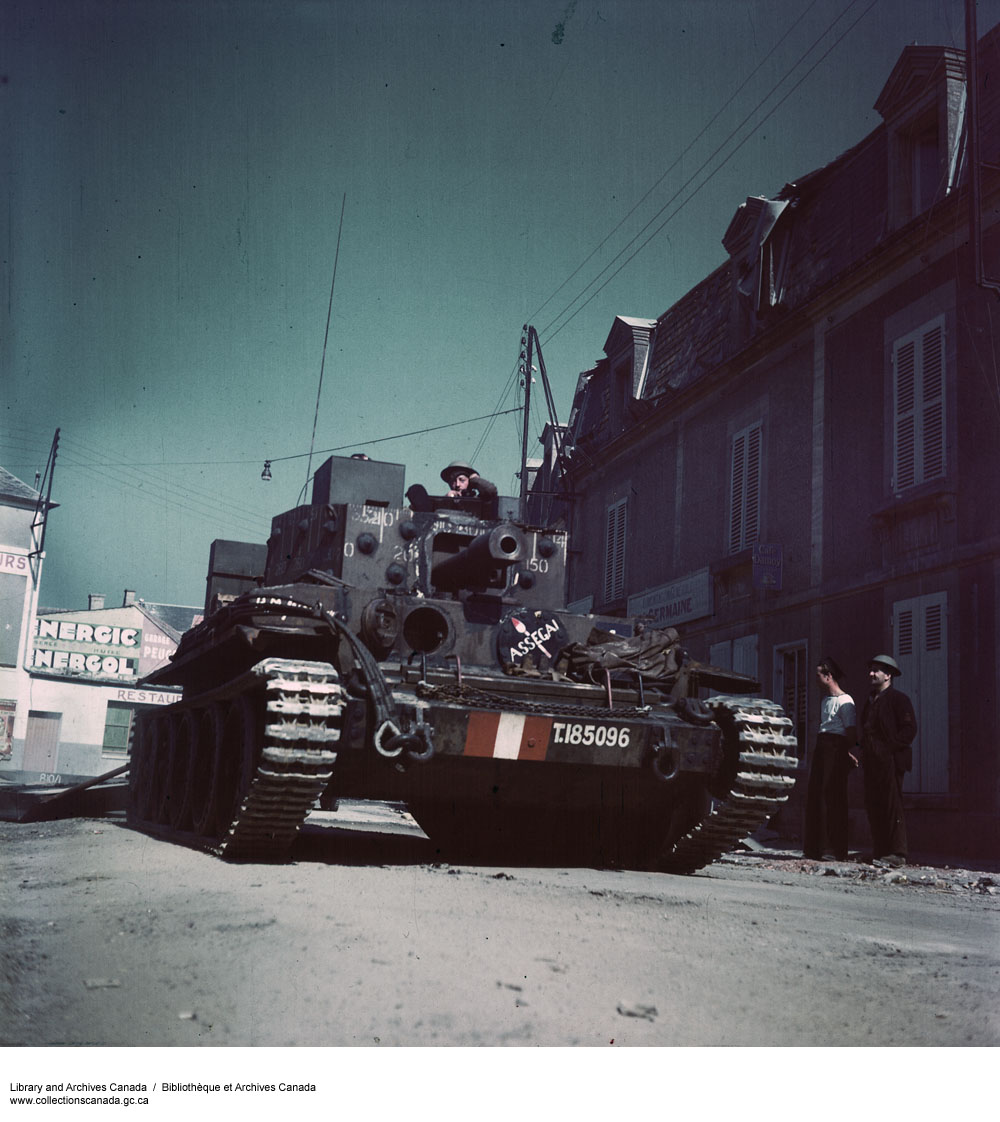


Jean Houel emerged at day’s end from the bomb shelter beneath the ruins of his home at Courseulles-sur-Mer to welcome his liberators to Normandy. “Here they are, the [English] Tommies,” he cheered, upon seeing the soldiers in their distinctive, British-styled helmets. Houel remembered one soldier proudly correcting him in French: “Je suis Canadien.”
Remembrance
Out of 1,074 Canadian casualties, 359 Canadians were killed on D-Day. The dead, along with scores of other Canadians killed in the fighting during the weeks that followed, are buried today in the serene and beautiful Canadian War Cemetery at Bény-sur-Mer, just behind Juno Beach. This, and numerous other memorials throughout Courseulles, Bernières and St. Aubin-sur-Mer, commemorate Canada’s sacrifice on D-Day. A private museum, the Juno Beach Centre, overlooking the beach at Courseulles, also tells the story of Canada’s role in the invasion of Normandy.
Every year on 6 June, the people of the villages along Juno Beach pay tribute to the men who fought and died there. They parade through streets festooned with maple leaf flags and hold services and vigils along parts of the seawall, in memory of their Canadian liberators.