
Download the free Kindle app and start reading Kindle books instantly on your smartphone, tablet, or computer - no Kindle device required.
Read instantly on your browser with Kindle for Web.
Using your mobile phone camera - scan the code below and download the Kindle app.

Follow the author
OK
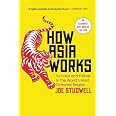
How Asia Works
Purchase options and add-ons
“A good read for anyone who wants to understand what actually determines whether a developing economy will succeed.”—Bill Gates, “Top 5 Books of the Year”
“The best story of the East Asian economic miracle.”—Dan Wang, author of Breakneck
An Economist Best Book of the Year from a reporter who has spent two decades in the region, and who the Financial Times said “should be named chief myth-buster for Asian business.”
In How Asia Works, Joe Studwell distills his extensive research into the economies of nine countries—Japan, South Korea, Taiwan, Indonesia, Malaysia, Thailand, the Philippines, Vietnam, and China—into an accessible, readable narrative that debunks Western misconceptions, shows what really happened in Asia and why, and for once makes clear why some countries have boomed while others have languished.
Studwell’s in-depth analysis focuses on three main areas: land policy, manufacturing, and finance. Land reform has been essential to the success of Asian economies, giving a kick-start to development by utilizing a large workforce and providing capital for growth. With manufacturing, industrial development alone is not sufficient, Studwell argues. Instead, countries need “export discipline,” a government that forces companies to compete on the global scale. And in finance, effective regulation is essential for fostering, and sustaining growth. To explore all of these subjects, Studwell journeys far and wide, drawing on fascinating examples from a Philippine sugar baron’s stifling of reform to the explosive growth at a Korean steel mill.
“Provocative . . . How Asia Works is a striking and enlightening book . . . A lively mix of scholarship, reporting and polemic.”—The Economist
“Believe it or not, this is actually my favorite pop economics book of all time.”—Noah Smith, author of Noahpinion
- Print length400 pages
- LanguageEnglish
- PublisherGrove Press
- Publication dateMay 20, 2014
- Dimensions5.5 x 1.2 x 8.75 inches
- ISBN-100802121322
- ISBN-13978-0802121325
Explore your book, then jump right back to where you left off with Page Flip.
View high quality images that let you zoom in to take a closer look.
Enjoy features only possible in digital – start reading right away, carry your library with you, adjust the font, create shareable notes and highlights, and more.
Discover additional details about the events, people, and places in your book, with Wikipedia integration.
Frequently bought together

Customers who viewed this item also viewed
- How Africa Works: Success and Failure on the World's Last Developmental FrontierHardcoverFREE Shipping on orders over $35 shipped by AmazonGet it as soon as Saturday, Oct 24
- Why Nations Fail: The Origins of Power, Prosperity, and PovertyPaperbackFREE Shipping on orders over $35 shipped by AmazonGet it as soon as Saturday, Oct 24
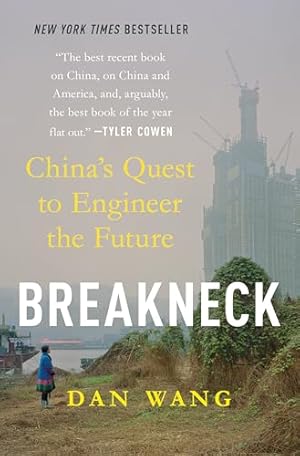
- Breakneck: China's Quest to Engineer the FutureHardcoverFREE Shipping on orders over $35 shipped by AmazonGet it as soon as Saturday, Oct 24
- From Third World to First: A Statesman’s Powerful Story of Transformation from Poverty to National LeadershipHardcoverFREE Shipping on orders over $35 shipped by AmazonGet it as soon as Saturday, Oct 24
- Chip War: The Fight for the World's Most Critical TechnologyPaperbackFREE Shipping on orders over $35 shipped by AmazonGet it as soon as Saturday, Oct 24
- China's Economy: What Everyone Needs to Know®PaperbackFREE Shipping on orders over $35 shipped by AmazonGet it as soon as Saturday, Oct 24
Customers also bought or read
- How Africa Works: Success and Failure on the World's Last Developmental Frontier
Hardcover$19.97$19.97Delivery Sat, Oct 24 - Asian Godfathers: Money and Power in Hong Kong and Southeast Asia
Paperback$11.97$11.97Delivery Sat, Oct 24 - MITI and the Japanese Miracle: The Growth of Industrial Policy, 1925-1975
Paperback$21.29$21.29Delivery Sat, Oct 24 - Why Nations Fail: The Origins of Power, Prosperity, and Poverty#1 Best SellerNon-US Legal Systems
Paperback$10.92$10.92Delivery Sat, Oct 24 - Poor Economics: A Radical Rethinking of the Way to Fight Global Poverty
Paperback$17.00$17.00Delivery Sat, Oct 24 - Chip War: The Fight for the World's Most Critical Technology#1 Best SellerMicroprocessor Design
Paperback$15.75$15.75Delivery Sat, Oct 24 - Kicking Away the Ladder: Development Strategy in Historical Perspective
Paperback$19.41$19.41Delivery Sat, Oct 24 - The Wealth and Poverty of Nations: Why Some Are So Rich and Some So Poor
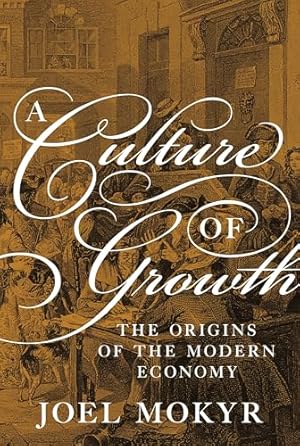
Paperback$11.48$11.48Delivery Nov 6 - 12 - A Culture of Growth: The Origins of the Modern Economy (The Graz Schumpeter Lectures)
Paperback$13.72$13.72Delivery Sat, Oct 24 - Red Dawn Over China: How Communism Conquered a Quarter of Humanity
Hardcover$24.44$24.44Delivery Sat, Oct 24 - Bad Samaritans: The Myth of Free Trade and the Secret History of Capitalism
Paperback$10.59$10.59Delivery Sat, Oct 24 - Gambling on Development: Why Some Countries Win and Others Lose
Hardcover$26.95$26.95Delivery Sat, Oct 24 - Two Paths to Prosperity: Culture and Institutions in Europe and China, 1000–2000
Hardcover$30.47$30.47Delivery Sat, Oct 24 - Slouching Towards Utopia: An Economic History of the Twentieth Century
Paperback$15.08$15.08Delivery Sat, Oct 24 - The Rise and Fall of American Growth: The U.S. Standard of Living since the Civil War (The Princeton Economic History of the Western World)
Paperback$15.70$15.70Delivery Sat, Oct 24 - The Party: The Secret World of China’s Communist Rulers – A Revelatory Inside Look at the CCP's Grip on Power
Paperback$11.98$11.98Delivery Sat, Oct 24 - The Rise and Fall of the Great Powers: Economic Change and Military Conflict from 1500 to 2000
Paperback$13.49$13.49Delivery Sat, Oct 24 - How to Win a Trade War: An Optimistic Guide to an Anxious Global Economy
Hardcover$16.65$16.65Delivery Sat, Oct 24 - The Entrepreneurial State: Debunking Public vs Private Sector Myths
Paperback$12.58$12.58Delivery Sat, Oct 24 - Trade Wars Are Class Wars: How Rising Inequality Distorts the Global Economy and Threatens International Peace
Paperback$14.84$14.84Delivery Sat, Oct 24 - How the World Became Rich: The Historical Origins of Economic Growth
Paperback$24.95$24.95Delivery Sat, Oct 24 - A Fabulous Debt: The Epic Story of How Bonds Built the Modern World#1 Best SellerBonds Investing
Hardcover$32.62$32.62Delivery Sat, Oct 24 - The Wages of Destruction: The Making and Breaking of the Nazi Economy
Paperback$20.55$20.55Delivery Sat, Oct 24 - Broken China: How the Economic Miracle Shattered and What it Means for the World
Just releasedHardcover$29.95$29.95Delivery Sat, Oct 24
Editorial Reviews
Review
Praise for How Asia Works:
"I found the book to be quite compelling. . . . Studwell’s book does a better job than anything else I’ve read of articulating the key role of agriculture in development. . . . A good read for anyone who wants to understand what actually determines whether a developing economy will succeed."—Bill Gates, "Top 5 Books of the Year"
“The best story of the East Asian economic miracle.”—Dan Wang, author of Breakneck
“Believe it or not, this is actually my favorite pop economics book of all time.”—Noah Smith, author of Noahpinion
"Pithy, well-written and intellectually vigorous . . . Studwell’s thesis is bold, his arguments persuasive, and his style pugnacious. It adds up to a highly readable and important book."—Financial Times
"Provocative. … How Asia Works is a striking and enlightening book … A lively mix of scholarship, reporting and polemic."—The Economist
"Very readable.... A fascinating and thoroughly deep account."—Bloomberg Radio
"Gripping … Readers will find Studwell’s informative and balanced report eye-opening."—Publishers Weekly
"Consistently engaging."—Booklist
"Studwell paints a vivid picture of business life in the region. If a copy of the Korean edition finds its way across the demilitarized zone to Pyongyang … we may find we have yet another Asian Tiger in our midst."—Management Today
"A solid blend of the descriptive and the prescriptive, with plenty of lessons that will be of interest to Asia hands, investors and policymakers."—Kirkus Reviews
"Perhaps my favorite economics book of the year. Quite simply, it is the best single treatment on what in Asian industrial policy worked or did not work, full of both analysis and specific detail, and covering southeast Asia in addition to the Asian tiger ‘winners.’ … Definitely recommended, you will learn lots from it, and it will upset people of virtually all ideologies."—Tyler Cowen, Marginal Revolution
"Illuminating"—Independent (UK)
"An interesting analysis of policy decisions that have and haven’t worked . . . a handy guide for anyone interested in one of the world’s fastest developing regions."—The Economic Times (India)
"Studwell’s latest book, How Asia Works, is also his most ambitions. . . . Declining to make broad pronouncements or dovetail with doctrine, Studwell demonstrates that the way Asia works isn’t quite as simple as we ever imagined."—Smart Planet
"A landmark work."—Asia Times (Bangkok)
"Bold and insightful. . . . Essential reading for anyone interested in understanding the ingredients for economic success."—The News International (Pakistan)
About the Author
Joe Studwell is the founder of the China Economic Quarterly. He has worked as a freelance journalist in Asia for nearly two decades. He is the author of The China Dream and Asian Godfathers.
Product details
- Publisher : Grove Press
- Publication date : May 20, 2014
- Language : English
- Print length : 400 pages
- ISBN-10 : 0802121322
- ISBN-13 : 978-0802121325
- Item Weight : 12.8 ounces
- Dimensions : 5.5 x 1.2 x 8.75 inches
- Best Sellers Rank: #55,771 in Books (See Top 100 in Books)
- #4 in Philippines History
- #6 in Comparative Economics (Books)
- #7 in South Korean History
- Customer Reviews:
About the author

Discover more of the author’s books, see similar authors, read book recommendations and more.
Related products with free delivery on eligible orders
Customer reviews
Customer Reviews, including Product Star Ratings help customers to learn more about the product and decide whether it is the right product for them.
To calculate the overall star rating and percentage breakdown by star, we don’t use a simple average. Instead, our system considers things like how recent a review is and if the reviewer bought the item on Amazon. It also analyzed reviews to verify trustworthiness.
Learn more how customers reviews work on AmazonCustomers say
Generated from the text of customer reviewsSelect to learn more
Top reviews from the United States
- 5 out of 5 stars
Overview of economic growth in asia focusing on what has led to success and failure
Reviewed in the United States on August 6, 2013How Asia Works by Joe Studwell is an account of economic developement and history in Asia. It focuses on a several key economies including Japan, Taiwan, Korea, Malaysia, the Philippines, Indonesia and finally to China. It discusses economic history and the sequencing of events that led to the success and failurs of different countries in Asia. The author draws conclusions about the right ingredients for economic growth in the modern era given the various lessons one can learn from Asian examples. The author breaks the book into 4 categories- Land, Manufacturing, Finance and finally China.
The author starts by discussing Land and agriculture. He starts out by making the observation that the highest efficiency in produce per square meter for agriculture occurs through home farming and that economies of scale might exist from a cost perspective given the cost of labour but does not mean that aggregate produce would be highest if we all farmed. He then discusses how farming in history has been dominated by landlords and the business of farming within a landlord system by rent seeking behaviour that does not sufficiently invest in land improvement. He finally concludes that when human capital is cheap gaining productivity by eradicating rents and equalizing ownership of farm land increases productivity and moves people up the income curve allowing for the first stage of economic growth. Studwell then goes on to discuss how this general idea was understood and implemented in Japan, Korean and Taiwan and in particular how their experiences led to yield improvements. It also discusses how these principles were not followed in Philippines and other parts of south east asia and how the differences in land policy were the first fundamental hurdle for economic developement to take off.
The author then moves on to manufacturing and discusses the concept of infant industries. He discusses the origin of the idea and how creating barriers to entry was understood to be a necessary part of fostering domestic industry. The need to create a system of carrots for successful ventures and sticks to punish failures was shown to be an integral part of successful development policy and the differences between Korean and Malaysia is used as an example to show how competition was needed to keep entrepreneurs more honest. Focusing on exports is shown to be a key to forcing companies up technology curves and putting them in a competetive landscape to perfect the growth process and that preferential credit was a means to facilitate projects like this. Having industrial policy is shown to be more effective when looking at the differences between Korean and Taiwan as an example.
The author then goes on to finance. Having finance controlled by industrial policy rather than nepotistic interests is quite obviously shown to have major impacts on the quality of investment. Southeast asia and crony capitalism are given as examples of how credit was funelled into asset gathering instead of broadening productive capacities. The differences in experience between Indonesia and Korea are given as examples to think about. The liberalization of finance is also discussed and the merits of liberal capital flows vs closed capital accounts are detailed and the author argues that in developement having control over the flow of capital in and out of the country can have massive benefits especially when those flows are hot money.
The author finally discusses China and where it fits in. Its similarity on industrial policy to north asia and taiwan is shown and its history of encouraging state upstream industries to continue to compete and stay competitive is discussed. The author also discusses the failure to reform the agricultural side of the economy and how that is a long run problem that needs to be solved for China to be able to escape the middle income trap. The limits of supporting upstream and midstream activities is discussed and the need for capital allocation to start flowing towards creating consumer brands is considered. The author covers the successful parts of China's growth model as well as the limits of it and considers other asian countries lessons to be heeded.
This is a combination of history and economic policy lessons as a function of that history. It is coherent, interesting and insightful. One finishes it believing that free market capitalism too is dependent on institutional arrangement and market structure. The need to adapt developement strategy to the stage of economic developement is currently in is given to be of critical importance. This reads well and illuminates developent in Asia to the reader. It contains anecdotal stories and economic interpretation. It caters to a wide audience and can be appreciated on many levels.
8 people found this helpfulSending feedback...Sending feedback...HelpfulThank you for your feedback.Sorry, we failed to record your vote. Please try againThanks, we'll investigate in the next few days.Sorry, We failed to report this review. Please try againWe'll check if this review meets our community guidelinesOpens in a new tab. If it doesn't, we'll remove it.
CancelReport - 4 out of 5 stars
Capitalist prosperity thanks to the Communists!
Reviewed in the United States on September 11, 2013'How Asia Works' passes the sniff test in that it actually helps to explain current events in Asia - for example the current fun and games with the Thai government's guaranteed rice purchases, which post-date the publication of the book.
The most important premise in the book is the need for land reform to fund industrialisation.
By 'land reform' he means distributing land equally among farming families, by taking it off the big landowners.
Land reform does not come easily:
In Japan the first (and initially successful) reform was after the Meiji Restoration, and the second immediately after the Second World War.
In Taiwan it followed the defeat of the Kuomintang (KMT) by the Communists in China. Initially Communist land reform in China was popular with the people, and the KMT were forced to copy it in Taiwan to achieve some popularity with the locals.
In South Korea Syngman Rhee's government resisted land reform until it was nearly swept into the sea by Kim Il Sung's invasion. When the South Koreans retook Korea, they found Communist land reform was very popular with the farmers, and were forced to accept it.
The ensuing agricultural boom gave these governments the cash to fund industrialisation. Studwell shows how they largely got it right, by copying the 19th Century Prussian model.
(In China and North Korea the agricultural boom ended when the Communists collectivised the farms.)
In South East Asia land reform never took place, probably because events were not dramatic enough to force it to happen. Consequently large landowners live very well, while ordinary farmers are very poor, and agricultural productivity is low.
In describing industrialisation, Studwell compares the successful Japan/South Korea/Taiwan model of competition between state supported companies (with the creative destruction of the failure of some) and the discipline of serving export markets versus the failure to introduce competition and export discipline in South East Asia. The outcome is exemplified by Toyota/Honda/Hyundai versus Proton.
The failings in South East Asia described in this book are pretty much as described in Studwell's earlier "Asian Godfathers".
'How Asia Works' attracted a fair amount of criticism here in Hong Kong for appearing to advocate financial repression (paying derisory interest rates on household savings, enforced by exchange controls) and state planning - we have a very good vantage point of this process in China, and worry about the effects - for example an uncontrolled shadow banking system and misallocation of easy credit by State Owned Enterprises.
Studwell does not advocate this as a universal panacea - he points out the problems that South Korea had, and that they were lucky to get away with it - and that the system gets a country to a certain level of development, after which it is necessary to modernise - which may not always work - as in Japan.
His conclusion is that South East Asia will probably never fulfil its potential, and that China might.
This book offers a helpful political-economic model for those attempting to understand Asia generally, and, most importantly, China.
19 people found this helpfulSending feedback...Sending feedback...HelpfulThank you for your feedback.Sorry, we failed to record your vote. Please try againThanks, we'll investigate in the next few days.Sorry, We failed to report this review. Please try againWe'll check if this review meets our community guidelinesOpens in a new tab. If it doesn't, we'll remove it.
CancelReport - 5 out of 5 stars
Excellent non-technical assessment of economic development policies
Reviewed in the United States on October 1, 2013The title, How Asia Works, is misleading. I downloaded a sample of this book because I expected it to be an explanation and analysis of the Asian work ethic. To my pleasant surprise, it is about why the East Asian economies of Japan, Korea, Taiwan and China have achieved high levels of economic development in a very short time while the economies of Southeast Asia--the Philippines, Indonesia, Malaysia and Thailand--have been much less successful. I have lived and worked in Asia for 21 years and I found this book to be one of the most insightful easy-to-read books on economic development that I have read in 30 years.
Joe Studwell is an economic journalist who has spent many years covering countries in the region. He has a free-flowing narrative that is entertaining and compelling, interwoven with details and anecdotes on the economies of each of the 8 countries. This is not an academic work. There are no charts or tables and statistics are incorporated into the text. He cites many sources to support his points but these are mainly confined to end notes.
Studwell identifies three key sets of policies responsible for the development success of the Northeast Asian economies--agricultural land reform, a development policy strongly focused on manufacturing and control of financial policy to support the two. He evaluates the history of policies and performance of each of the eight countries on the basis of these three development criteria and explains why each of the four Northeast Asian economies succeeded and the Southeast Asian countries have not.
Joe Studwell is very critical of development economists and the prescriptions of the IMF and the World Bank in particular. Although these criticisms are justified to a large extent, I felt that the were overstated. Development economists are hardly unanimous on the path to achieve economic development. The debate has raged for 60 years or more and Studwell, to his credit, has made a thoughtful contribution.
A shortcoming of the book, which Studwell readily acknowledges, is that it does not investigate the path forward after a country has achieved high levels of per capita income. Japan's economic malaise of the past 20 years is a case in point. The economic development policies that served Japan well over the past 60 years may no longer be suitable for the world's third largest economy. Korea, Taiwan and China will face similar challenges.
I strongly recommend this book to anyone with an interest in economic development in general and, specifically, in the implementation of development strategies in East and Southeast Asia.
2 people found this helpfulSending feedback...Sending feedback...HelpfulThank you for your feedback.Sorry, we failed to record your vote. Please try againThanks, we'll investigate in the next few days.Sorry, We failed to report this review. Please try againWe'll check if this review meets our community guidelinesOpens in a new tab. If it doesn't, we'll remove it.
CancelReport - 5 out of 5 stars
Challenges the conventional wisdom about economic development
Reviewed in the United States on January 10, 2016This should really be called Success and Failure of Asian Economic Development Models. It's an excellent book with solid historical and economic research but with a terribly generic name. I had studied economic development in college and have always been curious about the drivers of development, but this book alone gave me more insight by far than anything I've seen before. It essentially does case studies of major economies in the region to explain why some (Japan, Korea, Taiwan) successfully developed to middle/high income status and others (Malaysia, Thailand, Indonesia) were paper tigers which revealed their true nature during the Asian financial crisis. The book doesn't seem to have gained much popularity, which I suspect is due to it's heterodox historiography. It attributes the successful development of northeast Asia to land redistribution, state directed industrial development, and tight control of financial markets, the opposite of most mainstream recommendations. It's an inconvenient truth for the deregulation pushing free-traders that dominate the World Bank, IMF, and western free trade negotiators. There's enough meat in the historical analysis to rebut the standard critiques of state led industrialization, and I think it's crucial to read for anyone who wants to understand how China has done so well and what might be in store for other emerging economies. Highly recommended for anyone interested in how to make the world a better place.
One person found this helpfulSending feedback...Sending feedback...HelpfulThank you for your feedback.Sorry, we failed to record your vote. Please try againThanks, we'll investigate in the next few days.Sorry, We failed to report this review. Please try againWe'll check if this review meets our community guidelinesOpens in a new tab. If it doesn't, we'll remove it.
CancelReport - 5 out of 5 stars
An all encompassing, insightful book.
Reviewed in the United States on July 19, 2015The structure is simple . Compare the NE Asian successes ( Korea, Japan, Taiwan, China ), to the SE Asian disasters ( Philippines, Indonesia, Malaysia, Thailand, India) ignore unique nation states like Hong Kong, Singapore, then extract behaviors that seem to lead to economic powerhouse countries. Then discuss each country a little more deeply to unpack their individual successes, failures and on-going weaknesses. Along the way blow holes in the prevailing World Bank and IDB " economic wisdom" . The author has little regard for most economists and after reading the book I am inclined to agree. He does indicate that economic history is a useful pursuit in this analysis. I saw many of his observations "operating" in our recent Asia /Africa trip. Even though this is well before the Chinese stock market meltdown, much of his analysis indicated the inevitability of it. The text is easy to read, well organized and will consume you. No wonder Bill gates endorsed it.
One person found this helpfulSending feedback...Sending feedback...HelpfulThank you for your feedback.Sorry, we failed to record your vote. Please try againThanks, we'll investigate in the next few days.Sorry, We failed to report this review. Please try againWe'll check if this review meets our community guidelinesOpens in a new tab. If it doesn't, we'll remove it.
CancelReport - 4 out of 5 stars
Great Book and Great Answer to Those Mired in Neoclassical Economic Dogmatism
Reviewed in the United States on December 31, 2014A great book. Great storytelling in the model of Michael Lewis. A few parts dragged, but it was definitely a refreshing view of why growth succeeded in northeast Asia but not in southeast. The author, by his own admission, spent little time talking about the politics and how to build the necessary consensus to move from through each of the stages (e.g., from feudalism to land reform, from an agriculture focus to export-oriented and protectionist manufacturing, to largely free market). As he notes, foreign occupiers drove many of the changes in post-war Japan and Korea and totalitarian regime drove it in China. Clearly at each step, vested interests will oppose changes, as we saw most clearly in the Philippines. Another book examining the situation from a political perspective would be interesting. For example, what is needed to overcome a state mired in crony capitalism? Is the situation different in countries that are blessed with lots of oil, gas, and precious minerals? I originally learned about this book from Bill Gates' review of it asking about its relevance to Africa, which depends heavily on extraction industries. Those countries are prime candidates for agricultural revolution if kleptocrats and tribal extremists can be overcome
3 people found this helpfulSending feedback...Sending feedback...HelpfulThank you for your feedback.Sorry, we failed to record your vote. Please try againThanks, we'll investigate in the next few days.Sorry, We failed to report this review. Please try againWe'll check if this review meets our community guidelinesOpens in a new tab. If it doesn't, we'll remove it.
CancelReport - 5 out of 5 stars
This is one of the best economic history/development books out there
Reviewed in the United States on May 21, 2016This is one of the best economic history/development books out there. I stumbled on this via Gatesnotes. It was a page turner. As someone who is very familiar with Asia-I lived in Japan and frequently travel to the region for work, I must say that Studwell displayed amazing knowledge of history and culture, and wove that nicely with economics. What is also amazing is the the parallels with the current economics of the west...hulling out of the middle class through outsourcing of core manufacturing activities with an eye to pure short term results. A must read for policy makers in Latin America and Africa who are being hoodwinked by the laissez faire prescriptions of World Bank and IMF bureaucrats--folks that pretend to know how the world works through mathematical theories. Yes, governments should let entrepreneurs take risk and make money, but by golly, get so long as get something in return by forcing them to contribute to long term economic development!
19 people found this helpfulSending feedback...Sending feedback...HelpfulThank you for your feedback.Sorry, we failed to record your vote. Please try againThanks, we'll investigate in the next few days.Sorry, We failed to report this review. Please try againWe'll check if this review meets our community guidelinesOpens in a new tab. If it doesn't, we'll remove it.
CancelReport - 3 out of 5 stars
Thought-Provoking, but Too Opinionated
Reviewed in the United States on June 2, 2026Joe Studwell makes a strong case that development depends on disciplined government policy, capable execution, and a relentless focus on building productive capacity. His emphasis on export discipline, institutional follow-through, and “doing” rather than just talking is persuasive.
That said, the book is weakened by its heavy-handed criticism of the World Bank and IMF. Studwell repeatedly blames outside institutions for failures that often came down to domestic policy choices, weak implementation, or poor political discipline. The irony is that he cites Robert Wade often, even though Wade himself had World Bank experience, which makes the anti-World Bank framing feel overstated rather than analytically decisive.
I also think Studwell overemphasizes agriculture and spends too much time on gardening-style analogies. Agriculture clearly matters in early development, but the book pushes the point so far that it sometimes crowds out a more modern discussion of industrial upgrading, technology, and capital intensity. In several places, the argument also feels internally inconsistent: if countries like Korea were not simply following IMF or World Bank advice, then blaming those institutions for every failure becomes too easy.
The real lesson of the book is not that outside advisors are always wrong, but that governments must make good decisions and execute them well. In that sense, the right principle is trust but verify. Development is less about finding someone to blame and more about building the capacity to choose wisely, learn quickly, and correct mistakes.
One person found this helpfulSending feedback...Sending feedback...HelpfulThank you for your feedback.Sorry, we failed to record your vote. Please try againThanks, we'll investigate in the next few days.Sorry, We failed to report this review. Please try againWe'll check if this review meets our community guidelinesOpens in a new tab. If it doesn't, we'll remove it.
CancelReport
Top reviews from other countries
Gibran Lamas5 out of 5 starsOpinion about the book
Reviewed in Mexico on April 6, 2018I liked this book because teached me how the south east countries of Asia got to be developed countries and how México and other developing and undeveloped countries can follow for to be one developed country.
The points were simple:
1) Invest in the land/agriculture
2) Invest in the manufacture
3) Get the option to finance the first 2
In my opinion México how has experience and has a lot of agriculture and manufacture can use these points to improve as a country.
For my is a must to read this book.
Sending feedback...Thanks, we'll investigate in the next few days.Sorry, We failed to report this review. Please try againWe'll check if this review meets our community guidelinesOpens in a new tab. If it doesn't, we'll remove it.
CancelReport
Maher Tarazi2 out of 5 starsNot an easy read
Reviewed in the United Arab Emirates on February 16, 2026Interesting concepts in this book... But the way it's written does not really make an easy read.
Sending feedback...Thanks, we'll investigate in the next few days.Sorry, We failed to report this review. Please try againWe'll check if this review meets our community guidelinesOpens in a new tab. If it doesn't, we'll remove it.
CancelReport
Clyve Westerlund5 out of 5 starsOutstanding Read for those wanting know How Asia became economic powerhouses in their own right
Reviewed in Australia on October 16, 2020An Excellent book elaborating a very much valid and honest perspective of East Asia. This story or work provides a profound summary on the distinctions between North East and South East Asia with regards to developmental policies and economics. Furthermore, it reflects not only on these aspects, but also that of the Western World and how their (western worlds) influence was interpreted and used or ignored.
Sending feedback...Thanks, we'll investigate in the next few days.Sorry, We failed to report this review. Please try againWe'll check if this review meets our community guidelinesOpens in a new tab. If it doesn't, we'll remove it.
CancelReport
AK5 out of 5 starsBrilliant summary of the benefits and of a proper application of industrial policy with Asian case studies
Reviewed in the United Kingdom on January 8, 2015The book covers the economic development of both North-East and South-East Asian economies in the 20th and early 21st centuries in a compare and contrast fashion, in order to create a better understanding why some made giant leaps in development, while others made gains altogether far less impressive, largely irrespective of their starting levels.
The author is a staunch defender of state guided industrial policy - a view not particularly popular with neo-liberal economists, which nevertheless does a much better job of explaining the success of economic catching up to the developed world than any alternative explanation offered in the classical economics literature.
The main thrust is a three phase explanation model, namely agricultural land redistribution towards small scale yield intensive agriculture, an export driven manufacturing development, and finally a financial system geared towards supporting these two goals.
Covered examples, where these steps have been effectively followed followed and are presented in detail, are Japan (from the Meiji restoration onwards), South Korea, Taiwan and China. On the other hand, there are cases of South East Asian economies, which decided to liberalize their economies sooner - in the author's opinion prematurely - and were thereby not capable of following the three policies effectively. These include the outright dire example of the Philippines, the moderately better one of Thailand and the best of the lot - Malaysia - which still lags significantly behind the successes of the North-East model countries.
Before the author is labelled a big government supporter, or a 'statist' in the widest sense, he makes a clear distinction between the needs of the catching up / development phase (where even currently free market supporters such as the UK and the US used the same mechanisms in their early development phases) and the later phase, when the first world level has been achieved. In the latter case, many of the tools needed for success in the catch-up phase become hindrances to further development and further reforms become necessary, something that some countries managed better (South Korea) than others (Japan or Taiwan).
The analysis is brilliant, the case studies very compelling, and crucially, the framework does an excellent job of describing and predicting the developmental success. The comparison between different policy choices in both the successful and less successful groups give the reader further insight and provide a more differentiated picture of what is important for development and what not.
Furthermore, the framework also wonderfully explains why industrial policy worked in North-East Asia, and less well in other regions where it has been applied (such as SE Asia, the Soviet Union, or Latin America), showing which levers have a real positive impact, which are highly detrimental to development, and which are of no real consequence. This is not about creating protected state champions but much more about relentless pruning of the low performers, first through export discipline and subsequently also at home.
If you look at it from the perspective of a manager / owner of an individual company, you may well wish for governments not following the advice, since they may well force you to earn your money in a more difficult fashion than is strictly necessary. Especially export led growth, leading both to a knowledge build-up and a quality requirement through free competition on world markets (while being protected at home) will in the short run be much more laborious than investing in gambling, tourism or real estate but is a proven method of improving the well-being of the country as a whole, rather than the wealth of an individual or profitability of a single company. As long as the government leaves little leeway for circumventing its aims, while at the same time allowing the entrepreneurs to generate adequate profits while serving the developmental needs, a win-win can be produced.
Even if not all managers would like the lessons applied by the government of the country where they operate, there are excellent learnings for them, as there are for politicians. Many of the lessons can be applied in a business set-up, too - if you are looking at expansion into new markets or product areas, or trying to catch up with more dominant competitors.
The book is perhaps not something for the very casual reader, as it takes some effort, and is written from an expert's point of view (even if the writing is far from ponderous). If you are looking for an easier but less profound read, Kaplan's Asia's Cauldron: The South China Sea and the End of a Stable Pacific is probably the better start. If the topic is of serious interest, not reading this book would be an unfortunate omission, though.
Sending feedback...Thanks, we'll investigate in the next few days.Sorry, We failed to report this review. Please try againWe'll check if this review meets our community guidelinesOpens in a new tab. If it doesn't, we'll remove it.
CancelReport
Sun4 out of 5 starsMany facts and historical events
Reviewed in Germany on February 6, 2023The book delivers as promised. There's a lot of factual information and historical explanations on the success or failures of different areas of Asia.
If you get this book, you'll be thoroughly educated.
Sending feedback...Thanks, we'll investigate in the next few days.Sorry, We failed to report this review. Please try againWe'll check if this review meets our community guidelinesOpens in a new tab. If it doesn't, we'll remove it.
CancelReport