

Courtesy of Southwest Research Institute
Southwest Research Institute will use AI technology in a study to identify and count roaming dogs in 32 city areas.
-
 There’s bipartisan momentum from Texas officials to make the Lone Star State the home of the U.S. Space Academy. A state commission suggested spending up to $100 million in taxpayer money to secure the selection.
-
 The warnings surfaced in a trove of unreported court records. "I have been fighting about fixing this for months with people who didn't think the harms are severe enough," wrote one executive.
-
 Cartels are deploying advanced aircraft that can bypass electronic shields, prompting Mexico to build its own fleet of surveillance drones. This technological evolution risks undermining the government's costly counter-drone defense strategies.
-
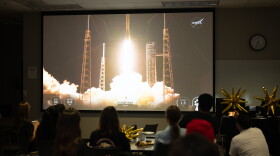 On Oct. 13, a Falcon 9 rocket roared into space, bound for the International Space Station. Among the cargo was PROVES-Maia, a satellite designed and built by students at Texas State University.
-
 Factory workers in India are being asked to wear GoPro cameras to record the way they do their jobs. The ultimate goal is to train robots to take over. Will it work?
-
 Last month, Lubbock City Council began the procedure to adopt a pause on large-scale data center development. If the moratorium passes, it will be two years until another one can be put in place. With more information and potential changes likely to come out of the state's legislative session, one councilman has argued that the city should hold off on playing its moratorium card. All the while, the clock may be ticking on the statewide pause on data centers.
-
 RSS feeds and access to “old Reddit” will disappear soon.
-
 A study from Common Sense Media says most safeguards in ChatGPT for Teens failed. The chatbot talks to teens like a friend and doesn't alert parents when users talk about self-harm and suicide.
-
 New research looks at the surprising similarities in the gut microbiomes of hunter-gathers in Tanzania and horticulturalists in Bolivia, and asks: What role do these bacteria play in human health?
-
 The 82-year-old scientist, originally from Belgium, is affiliated with the University of Wisconsin–Madison. His research into capturing neutrinos at the South Pole dates back to the 1980s.


