WORLD / JANUARY/FEBRUARY 2027
Ethiopia Is Still Reeling from Genocide. Now Another War Looms
I travelled there and found alleged war criminals still in power and fresh atrocities being committed
WORDS AND PHOTOS BY MEGHAN DAVIDSON LADLY
Published 6:30, NOVEMBER 11, 2026
This story contains details about sexual assault and violence that some readers may find disturbing.
LEMLEM ALAYAHU ONCE owned a farm and raised livestock. Now in her sixties, she’s widowed and raised her four children as a single parent.
Before civil war broke out in Ethiopia in late 2020, Alayahu lived in Kafta Humera district in what is now called Western Tigray, a zone whose borders have long been disputed. In the early 1990s, Ethiopia’s transitional federal government redrew regional boundaries and annexed land then belonging to the ethnic Amhara into the Tigray region. Tigrayan authorities forced Amharas to keep silent about their ethnic claims to the land or leave, often using strategies of violence and intimidation.
Decades later, the resulting hostilities helped trigger one of the world’s deadliest conflicts of this century. The two-year Tigrayan war initially sparked in Mekelle, Tigray’s capital, with Ethiopia’s federal government battling the Tigray People’s Liberation Front, a powerful political organization. It soon pulled in neighbouring regions, various militias, and Eritrean forces. In November 2020, federal and Amhara special forces joined with armed informal Amhara militia, the latter known as Fano, and seized control of Western Tigray.
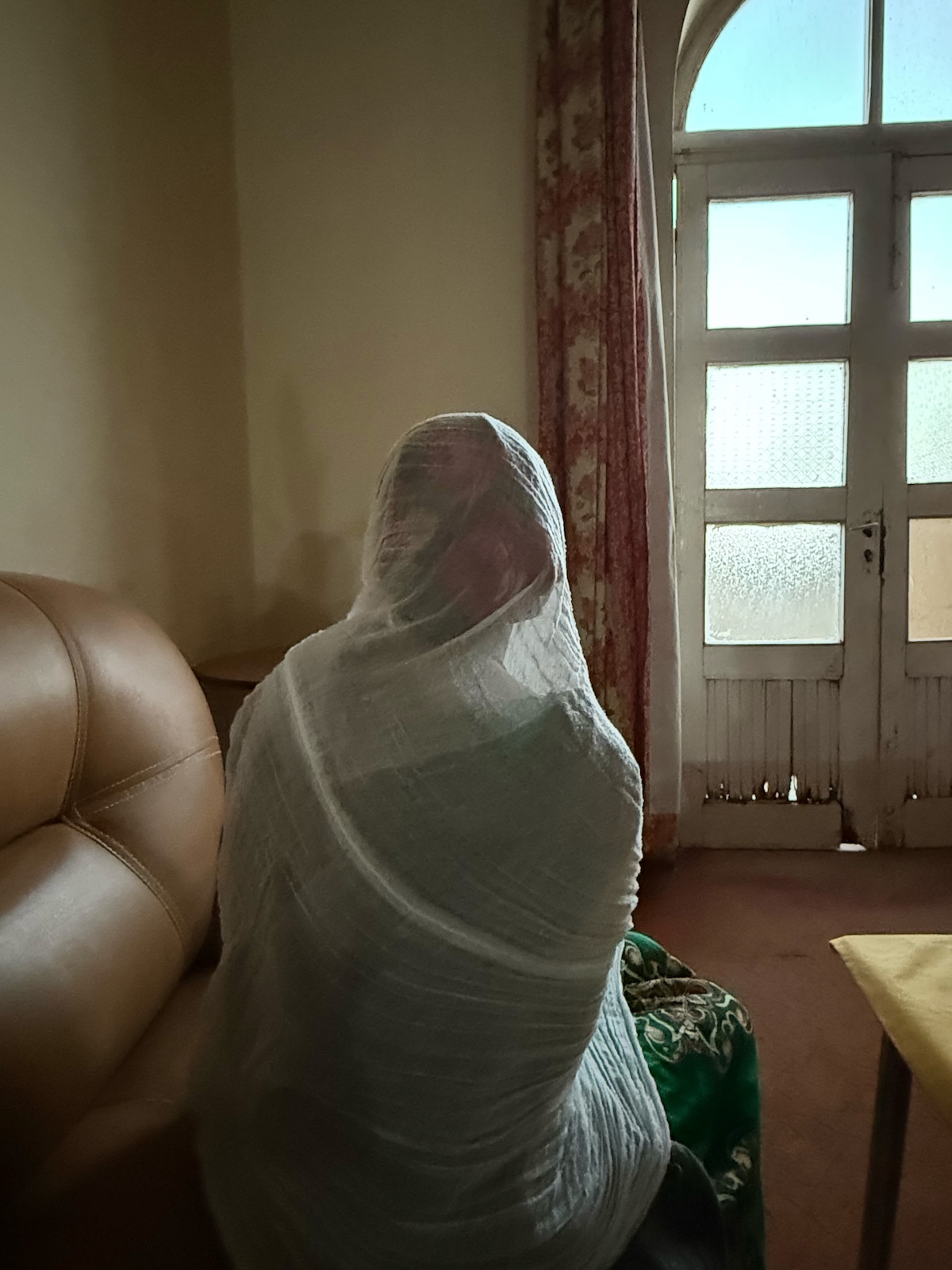
When Fano forces entered Alayahu’s town, she was out feeding her animals. The troops captured her and held her along with thirty other women, several of whom were pregnant, in a detention centre. At night, soldiers “would take someone outside . . . and commit crimes,” Alayahu recounts. They repeatedly sexually assaulted her and other women. “People were killed. We were interrogated for over a week.”
Though some locals spoke Amharic, they were often identifiable as Tigrayans through their tattoos, Alayahu recalls, gesturing to the ones on her wrist as an example. Many women, particularly in rural areas, have small crosses, dots, or lines tattooed on their faces, necks, hands, or gums as cultural markers. The practice, known as Nikisat, is common throughout both Amhara and Tigray; the tattoos differ based on ethnicity.
While the fighting in wars like Ethiopia’s is often framed as the product of rivalries between ethnicities, it’s frequently about land and power. The focus on identity groups shapes who is targeted, directing extreme violence against women and children.
Federal forces eventually collected the women and deposited them in the surrounding hills. And then the women walked. They crossed checkpoints, where they were mocked by Eritrean soldiers but ultimately left to continue on their way. Alayahu walked for over a month to reach the Seba Kare camp for internally displaced people, on the outskirts of Mekelle. Her adult children made their journeys here separately, but all of them survived.
By the time the federal government and the TPLF signed what many describe as a peace agreement, in November 2022, at least 600,000 people are believed to have died from violence, disease, and hunger, though sources vary widely on the death toll. Hundreds of thousands of Tigrayans experienced famine. And millions of citizens of various ethnicities were displaced either internally or across the border, into Sudan. In November 2023, the federal government announced the territorial dispute in Western Tigray would be resolved through a referendum, but this has yet to occur.
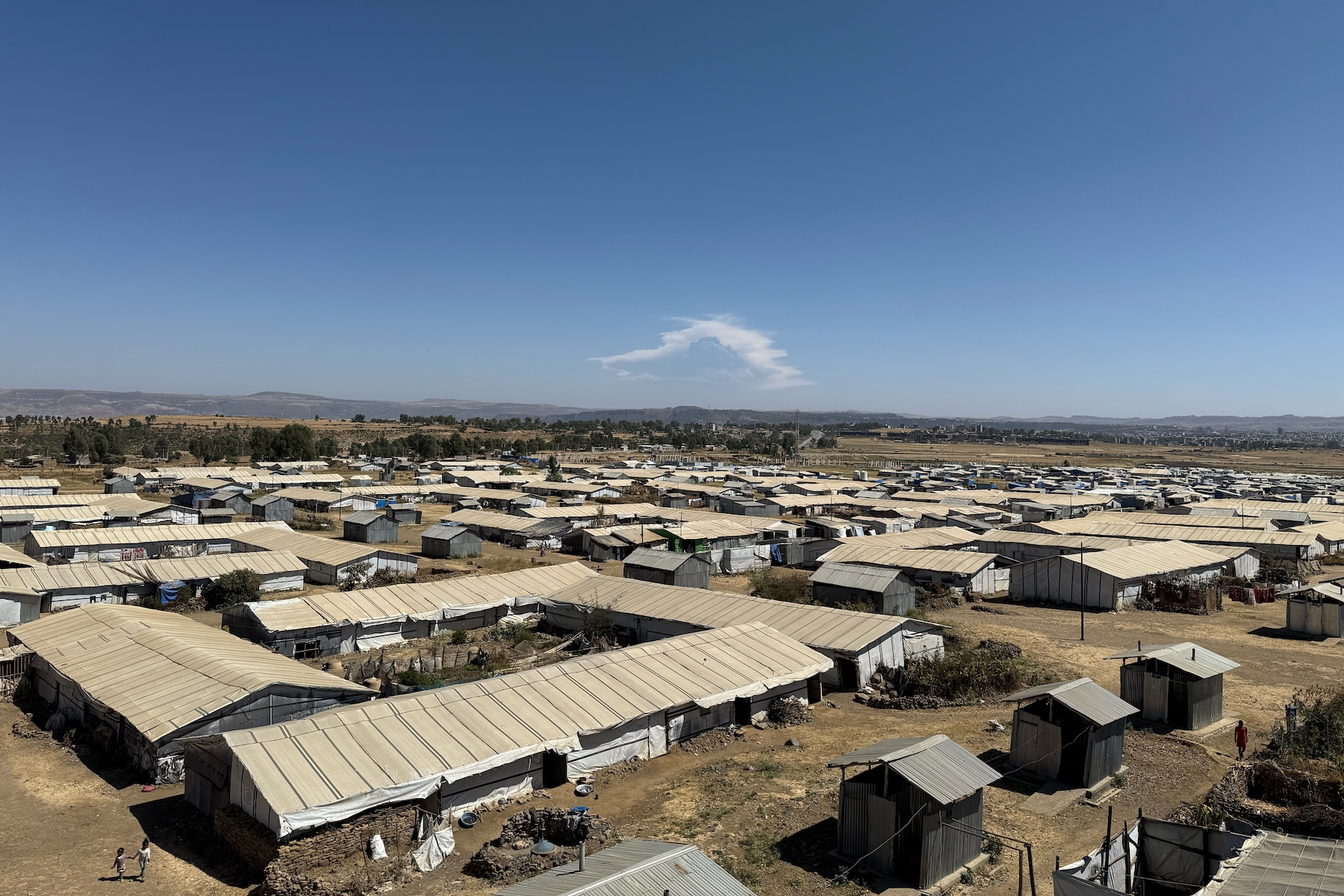
Alayahu is one of over 1.2 million people who fled Western Tigray. At Seba Kare, over 20,000 IDPs live in white tarpaulin tents battered by years of exposure to the elements. Last September, a hyena snatched and killed a toddler. Another child has since been attacked but survived.
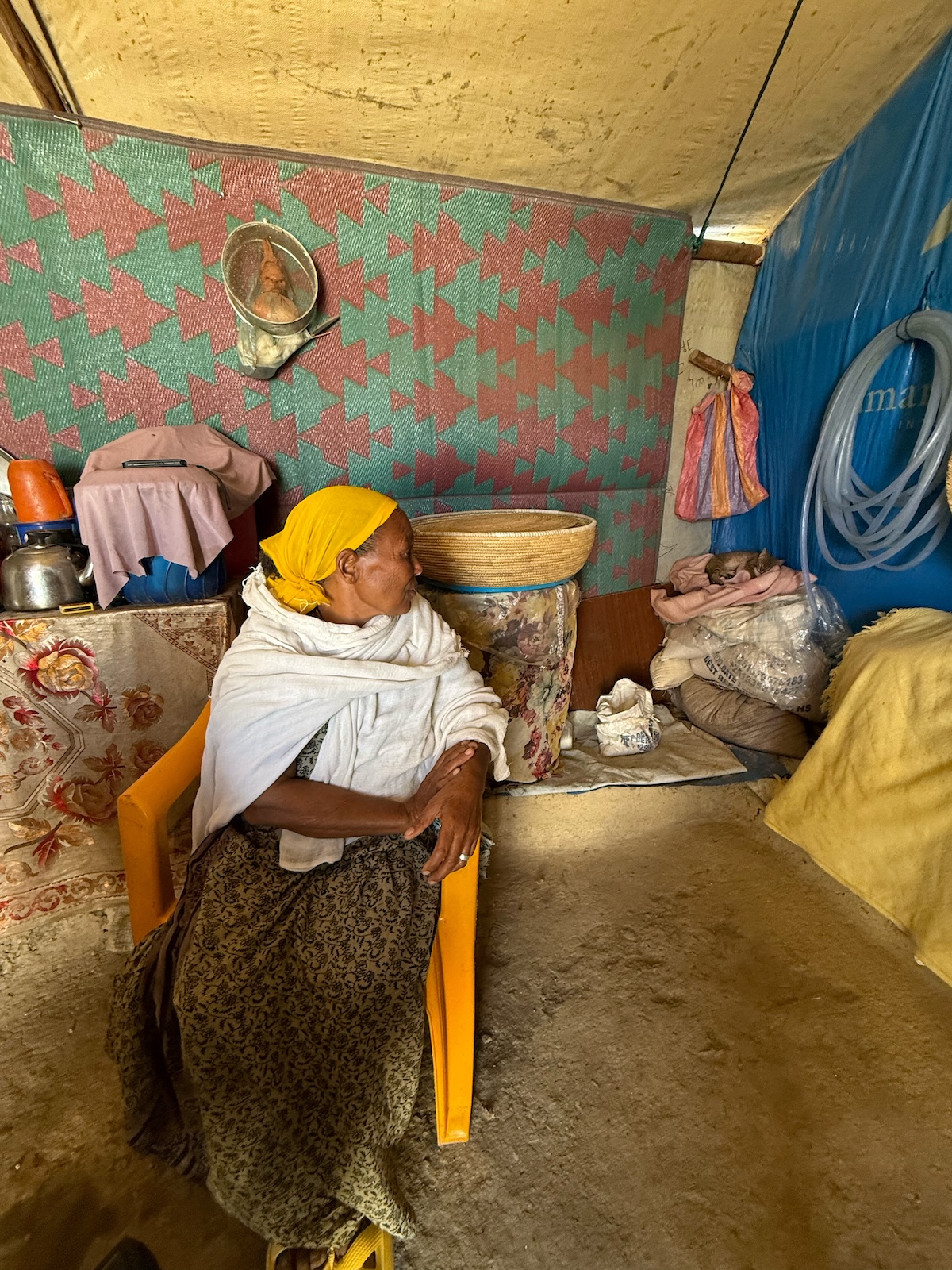
Amongst the rows of tarps and makeshift clothing lines, Alayahu’s tent is a small quiet space. When I meet her, in November 2025, she shows off the pictures and poetry her granddaughter inscribed on the walls, including a cat in black marker. A poem praising the strength of women, written in large letters, takes up almost a whole tarpaulin panel.
Sitting in a yellow plastic chair, Alayahu pauses periodically to fuss over her kitten curled up on some fabric in the corner. In the rainy season, her tent leaks. There are problems with water sanitation, and she suffers from stomach issues. The interim regional authorities governing Tigray promised those who were displaced that they would be able to go back to their homes, says Alayahu, “and yet we remain here.”
If the stories of Alayahu and other Tigrayan women articulate anything, it’s that the peace agreement utterly failed to usher in peace. Now, four years after the deal was signed, the country is erupting into another war.
THE TPLF BEGAN as a guerrilla militia in 1975. It formed to oppose the military junta known as the Derg, which came to power the previous year with the overthrow and murder of Haile Selassie, Ethiopia’s last emperor.
With Eritrean support, the TPLF overthrew the Derg in 1991 and transformed into a political party. It became the dominant power in Ethiopia’s national governing coalition, eventually ruling alongside three other ethnically based contingents: the Amhara Democratic Party, the Oromo Democratic Party, and the Southern Ethiopian People’s Democratic Movement.
But the administration proved to be autocratic, stirring years of anti-government protests. In 2018, the backlash forced then prime minister Hailemariam Desalegn to resign. When the federal coalition appointed Abiy Ahmed to take his place, he promised reform and anti-corruption initiatives.
Initially, Abiy’s rule was greeted with euphoria inside the country and cautious optimism outside its borders. The enthusiasm was, in part, owing to his Oromo and Amhara parentage, which made him the first Oromo prime minister. Oromos are the largest ethnic group within Ethiopia—comprising nearly 36 percent of the population, as compared to the 24 percent who are Amhara and the 6 percent who are Tigrayan—but they had long felt excluded from federal power and economic opportunities.
Abiy’s administration rallied a tired and alienated populace. He freed political prisoners, welcomed back exiled dissidents, appointed large numbers of women to senior state roles, and condemned the country’s use of torture. He was awarded the Nobel Peace Prize in 2019 for negotiating peace in Ethiopia’s almost twenty-year cold war with neighbouring Eritrea.
That year, Abiy coordinated a merger of three of the four federal parties. The TPLF refused to join, with many Tigrayans viewing the consolidation as a means of centralizing power. Tensions continued to rise as the Abiy administration, now ruling as the newly formed Prosperity Party, began to dismantle the Tigrayan saturation of the armed forces and removed Tigrayan leaders accused of corruption.
In 2020, the federal government postponed national elections due to the COVID-19 pandemic. But that September, Tigray held regional elections in defiance of the order, with the TPLF winning the regional poll. The federal government declared the vote illegal and began withholding federal funding from the province.
In November, Abiy blamed the TPLF for an attack on a federal army headquarters in Mekelle—for which the TPLF denied responsibility—and ordered a military offensive in response. Eritrean and Amhara forces entered the conflict, supporting federal troops. Over the next year, militias from the neighbouring Afar region joined the fighting, siding with the federal government. An Oromo militia aligned with the TPLF.
Over the course of the war, much of the fighting took place under a communications blackout: the federal government shut down cell service, the internet, and banking systems, isolating the Tigray region (whose population estimates vary, ranging from 5 to 7 million). Western Tigray saw some of the worst of the violence.
In 2021, the federal government declared a state of national emergency. (That year, Abiy won a general election, though some question the results.) It labelled the TPLF a terrorist organization and obstructed the flow of humanitarian aid into Tigray, leading to widespread famine. Federal forces conducted mass arrests and detained thousands of Ethiopians across ethnic lines, including journalists and human rights workers, suspected of association or broader ties with the TPLF. State officials stripped media outlets of their licences and suspended the operations of humanitarian organizations.
The African Union, an institution representing the continent’s fifty-five member states, intervened, hosting peace talks in Pretoria, South Africa, in October 2022. On November 2, the federal government and the TPLF signed the Agreement for Lasting Peace through the Permanent Cessation of Hostilities. Also known as the Pretoria agreement, it stipulated that Tigrayan combat forces would be disarmed and demobilized and that the federal government would assume control of Tigray through an interim regional administration. The Abiy administration would allow humanitarian and government aid to resume and restore telecommunication and infrastructure services. One clause of the agreement notes all sides must stop “collusion with any external force hostile to either party.” But Eritrea was not involved in the peace agreement, nor were Amhara or Afar forces.
A 2021 report from the United States government characterized the war as ethnic cleansing of Tigrayans. Several investigations, including two led by the United Nations, have found evidence that all sides in the conflict—including Tigrayans—committed war crimes. In 2024, the US-based New Lines Institute for Strategy and Policy released a report based on two years of research by dozens of global legal scholars, among them former Canadian justice minister Allan Rock and University of Ottawa law professor John Packer. It concludes that federal forces, the Eritrean Defense Forces, and the Amhara Special Forces committed genocide—including by “imposing measures intended to prevent births among Tigrayans.”
In a September 2023 report, one UN commission stated that the conflict remained unresolved nearly a year after the Pretoria agreement’s signing and that all sides were still committing war crimes in Tigray—particularly the Eritrean Defense Forces. So far, there have been no prosecutions, though there are some ongoing attempts in international courts by various human rights groups, including Amnesty International.
The Abiy administration has repeatedly denied that federal forces engaged in war crimes, lobbying to shut down one of the UN investigations early. (The Ethiopian Ministry of Defense did not respond to interview requests from The Walrus.) The government has drafted laws establishing special prosecution offices and a truth-seeking commission, as well as plans for a special court to oversee proceedings against those accused of war crimes. But none of the laws have passed, and the plans have mostly stalled. In Western Tigray, Human Rights Watch found that Amhara officials previously implicated in ethnic cleansing remained in positions of authority.
Although the Pretoria agreement included a commitment to initiating a transitional justice process, Abiy’s government has done little to set one in motion. In November 2022, it established a working group that hosted public consultations to help shape its approach. It invited international experts to be involved in the transitional justice process but later restricted their roles to an advisory-only capacity. Before it was shut down, the UN’s special commission criticized the transitional justice process as deeply flawed, stating that the government was failing to effectively investigate the alleged crimes. None of the working group’s proposals have been implemented so far, and the website for the federal transitional justice process now turns up an error message.
But even as the state tries to bury its crimes, other groups are stepping in to highlight them.
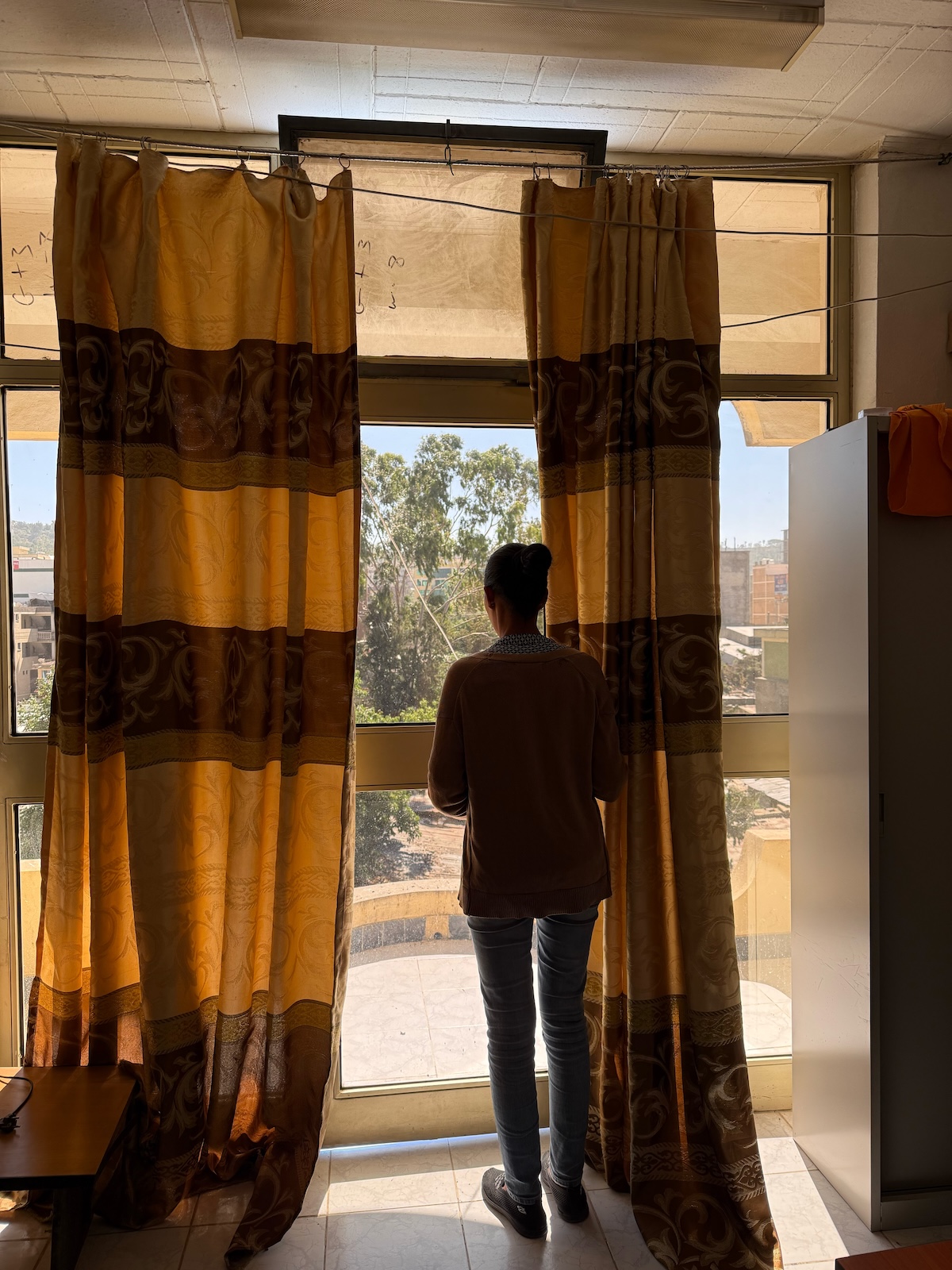
THE HEADQUARTERS OF the Commission of Inquiry on Tigray Genocide lies tucked off a main thoroughfare in Mekelle. Historically a trading hub, the city of over half a million is home to multiple university campuses. A tree-shaded courtyard and cheerful yellow exterior defy the sombre work taking place inside the building, up several flights of stairs. Doors are labelled with printed A4 sheets; one leads to the CITG’s Research Center for Gender Based Violence.
The one-room office is Yirgalem Gebretsadkan’s workspace. At the war’s outbreak, Gebretsadkan wanted to leave home to fight with the Tigray Defense Forces, a paramilitary organization, as her husband had done. But her mother was ill, and there was no one else available to look after the children. She had to stay.
Instead, Gebretsadkan, a lecturer of law at Mekelle University, joined colleagues and friends who’d begun documenting the destruction and violence they were witnessing within Tigray province—everything from human rights atrocities to environmental, economic, and infrastructure damage. In May 2022, the Tigrayan regional government formalized the grassroots effort and contributed funding.
The CITG’s goal is to gather enough evidence to prove that federal forces committed genocide against Tigrayans and to pursue accountability. As their investigators collect data, they aim to use rigorous standards modelled after the International Criminal Court’s methodology. Their hope is that their work will be accepted by international bodies such as the World Bank (a source of
significant funding for Ethiopia) and the UN for prosecuting potential war crimes.
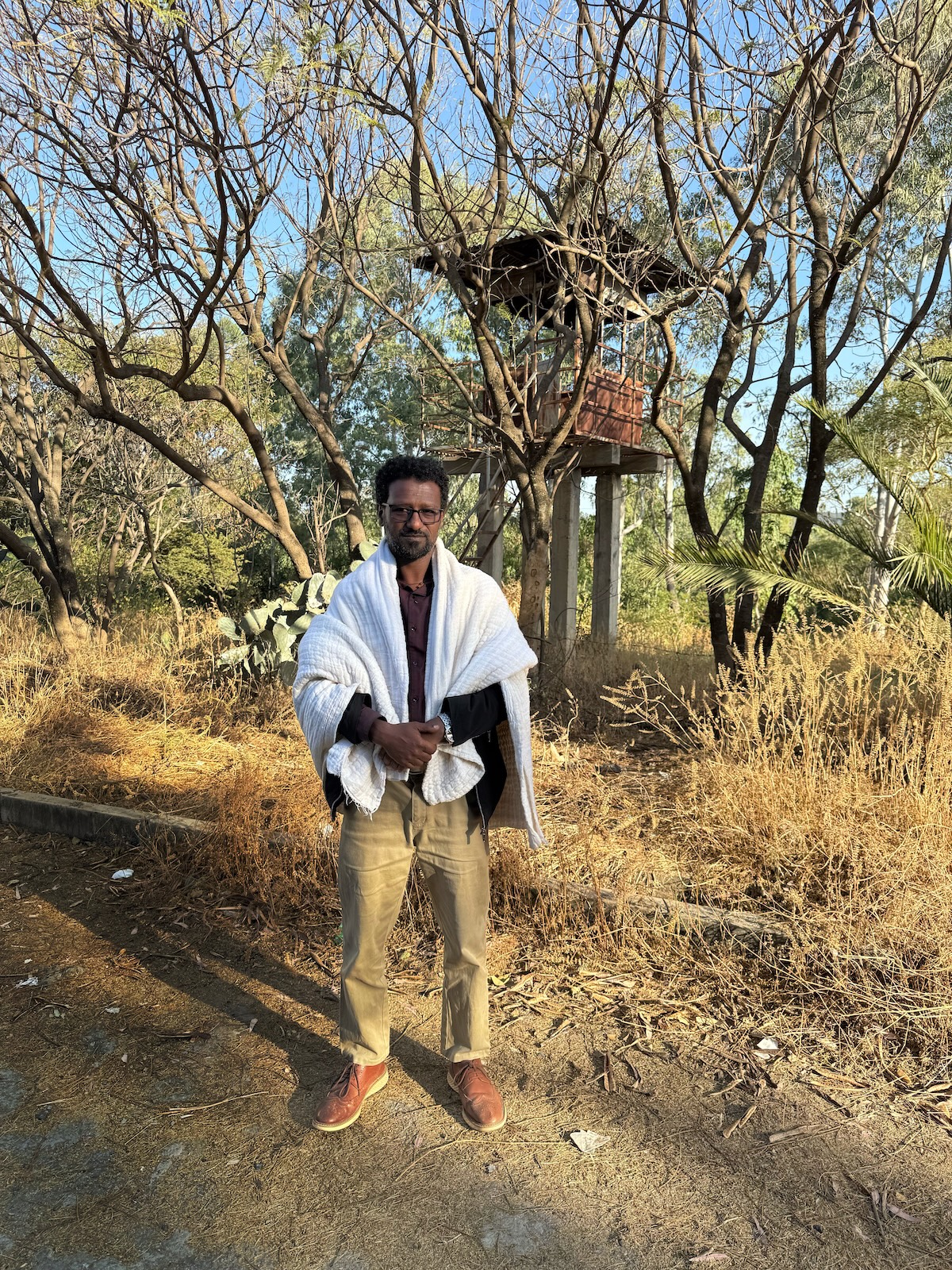
The Ethiopian government has not formally acknowledged the CITG, though some federal institutions have co-operated with it. Gebretsadkan and Yemane Zeray Mesfin, a soft-spoken associate professor of political science at Mekelle University and head of the CITG, stress that their group operates independently from any political agenda. (Their work covers crimes committed by Tigrayans but only when they are against other Tigrayans.)
Steely eyed behind a tidy desk, Gebretsadkan seems to be surprised by nothing about the grim details. The commission has so far documented around 167,000 cases of sexual assault—some of which happened in churches, at checkpoints, and in monasteries—and sexual slavery. Approximately 70 percent of those cases involve gang rape, ranging from two to fifty perpetrators per victim.
Survivors tend not to report their assaults, “because there is this stigmatization by the community, especially when it is gang rape and sexual slavery,” says Gebretsadkan. But she believes enough women have spoken up for her team to present evidence of genocide that could lead to criminal proceedings against various state and military leaders. Gebretsadkan doesn’t think the Ethiopian state alone will ever acknowledge any crimes without external intervention.
There is widespread documentation of Eritrean and Ethiopian soldiers inserting objects, including screws, stones, and nail clippers, into Tigrayan women’s reproductive organs, seemingly to cause severe long-term injuries and prevent births. “These perpetrators, either before perpetrating it or afterwards, make statements to say what they are doing, that they come to destroy the Tigrayan population through rape,” says Gebretsadkan.
According to reporting in the Guardian, some inserted written notes, with one reading, “‘Sons of Eritrea, we are brave. We have committed ourselves to this, and we will continue doing it. We will make Tigrayan females infertile.’”
MANY OF THE country’s efforts to move on from war have been fraught. The Pretoria agreement stipulated that TPLF fighters must disarm, and a separate UN-facilitated National Rehabilitation Commission was established with the aim that ex-combatants, numbering around 370,000, from all the regions embroiled in the war, should be disarmed and receive support reintegrating into civilian life. Based on the commission, the government formed a National Demobilization and Reintegration Program. (The Canadian government has contributed $14 million to the program, among other funding initiatives in northern Ethiopia.)
Mihret enrolled in the program in December 2024 (she is using only her first name for her safety). Now thirty-seven, she was a civil servant in the Tigrayan state government before she joined the Tigray Defense Forces in September 2020. She worked in the TDF’s financial division but regularly visited the front lines to deliver supplies and cash.
The disarmament program consisted of six to eight days of seminars and workshops. Training was held in a part of Mekelle University’s campus that was converted into a rehabilitation centre for Tigrayan combatants. Each participant received a sum of money to rebuild their lives; Mihret got 90,000 Ethiopian birr (around $800).
But Mihret did not find the sessions particularly helpful. She and around 300 from her unit learned about the Ethiopian constitution and were advised to start businesses with their payments. Mihret has instead gone back to her job in the regional government.
When asked for comment, Alexandre Fournier, a media relations spokesperson at Global Affairs Canada, wrote in an email that the program had demobilized 84,991 ex-combatants in its first year. He added that tailored mental health support is provided to individuals who are identified during training, and that coverage is anticipated to expand as the program develops and more financial resources are secured.
Mihret was most disillusioned with the trauma therapy she and other former combatants received. During the war, her father was arrested in Western Tigray by Amhara forces, and two of her sisters were killed in an IDP camp in a drone attack by federal forces on Ethiopian Christmas day. “ We cannot be healed by an hour, or a few hours, of training,” she says.
Other aspects of recovery are too large for most institutions to address. The UNFPA Ethiopia Preparedness and Humanitarian Response Plan for 2024 estimates that 7.2 million people countrywide are in need of gender-based violence response—medical treatment and mental health support—up from 6.7 million in 2023 and 5.8 million in 2022.
During the war, Ayder Comprehensive Specialized Hospital in Mekelle became a treatment hub for gender-based violence survivors. The teaching hospital continues to receive gender-based violence survivors arriving from Western Tigray and elsewhere.
One of Ayder’s patients, Mebraat, is from Sheraro, a town of about 36,000 in the Tigray region near the Eritrean border. (She is using a pseudonym for her safety.) In a barely audible voice, she explains how, in December 2020, Eritrean soldiers attacked the community.
Her husband, a soldier with the Ethiopian National Defense Forces, was serving elsewhere in Tigray. Mebraat was alone with her one-year-old son when Eritrean soldiers came to her house and fifteen of them sexually assaulted her in front of her child, then set her on fire. Her son was buried and left for dead by the soldiers. He was rescued and survived but now has respiratory issues.
Sheraro’s hospital lacked the facilities to treat complex cases. After the soldiers left, a neighbour took Mebraat to a medical centre elsewhere in northwestern Tigray, and from there she was referred to Ayder hospital. Her injuries were severe, and she had to have her uterus removed. She has scarring all over her torso and suffers from heart problems. Doctors at Ayder referred her to Addis Ababa for further surgery, but she can’t afford to travel there. She has been living in Mekelle to be near Ayder hospital for treatment.
Mebraat is raising her son alone. Her husband left her after the assault, and her father has disowned her. She wants to get treatment for her heart. “I just want to live,” she says.
Though Ayder provided free care during the war, it’s been overwhelmed by the number of people seeking help. With insufficient federal funding, as of May 2024, the hospital has been charging patients for services. Last November alone, there were seventy-two new arrivals at Ayder hospital. Some had developed complications due to delayed medical care—cases of cervical cancer and mental health problems. But others were recent victims.